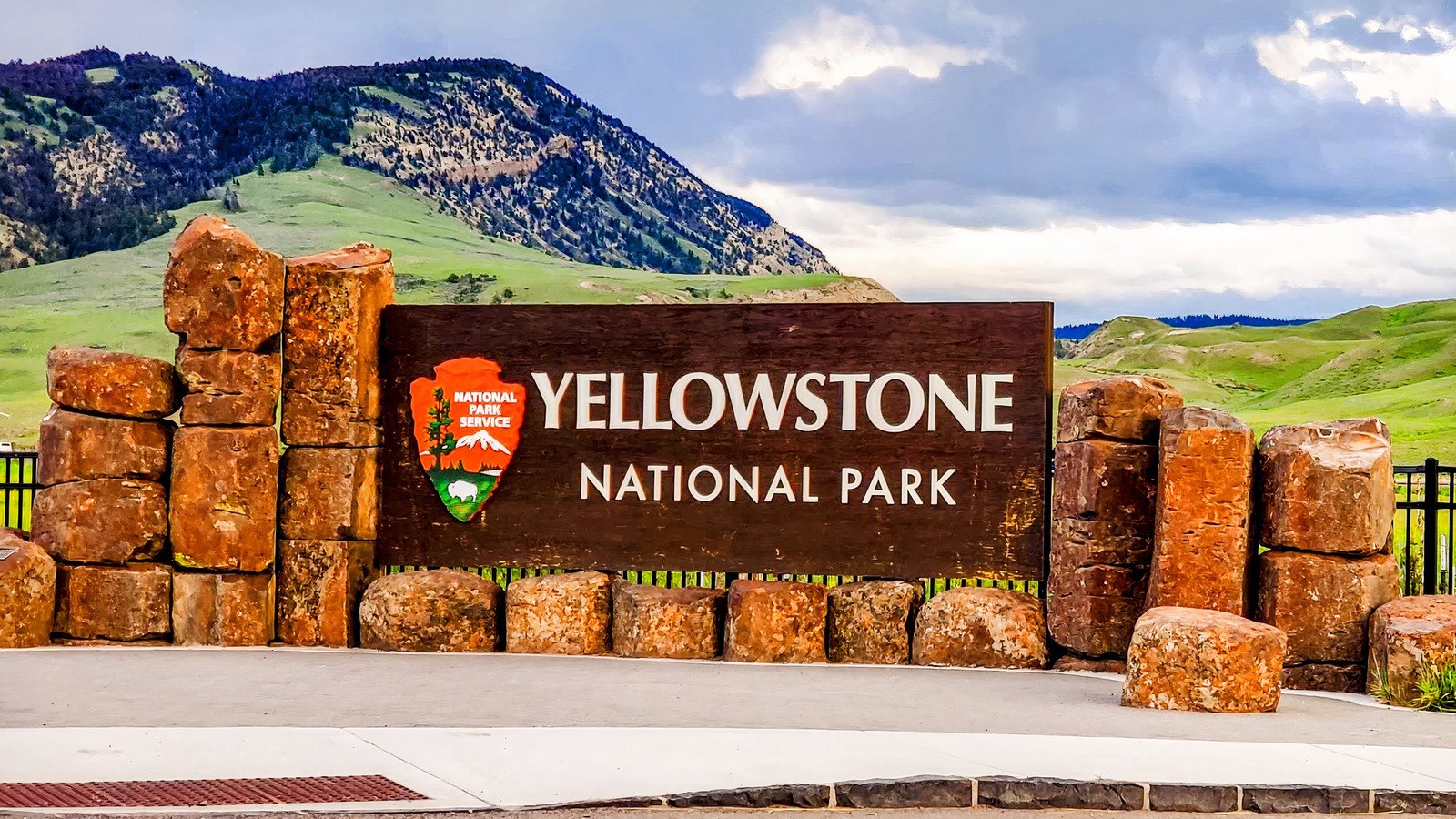
Yellowstone National Park has been in the news a lot lately, especially after video of a bison tossing a tourist into the air went viral.
Park visitors are typically used to waiting for bison to clear the road. But one tourist recently got an expensive reminder of who truly has the right of way on Yellowstone’s roads — and it’s not the humans.
The latest clip comes less than two weeks after a much more serious bison encounter inside Yellowstone also went viral. Both incidents surfaced at an especially important time for Yellowstone visitors. Late July marks the beginning of the bison mating season, when bulls compete for mates and can become especially unpredictable.
Yellowstone National Park Bison Popped A Tourist’s Tire With Its Horn
A July 20 TikTok video shared by @tonya_names captures several vehicles slowed or stopped near a bison inside Yellowstone National Park.
In the footage, one vehicle seems to be in the way of where the animal wanted to go. The bison approached the car, swung its head, caught the front passenger tire with a horn, and punctured it. Afterward, the animal simply made its way past the vehicle.
The good news is that there are no reports that anyone inside the vehicle was injured. Still, the video provides a good example of how a routine Yellowstone “bison jam” can still be a precarious situation for visitors.
Bison frequently use Yellowstone’s roads, and visitors sometimes find themselves surrounded by them even when they didn’t intentionally approach them. The National Park Service tells drivers in that situation to remain patient, drive slowly, and stay inside the vehicle. Drivers should wait for the animals to move rather than honking or trying to force their way through the herd.
But staying safe can sometimes mean sitting still for a while.
Yellowstone explicitly warns visitors to plan for extra driving time during their visit because bison jams are common. With the animals weighing up to 2,000 pounds and capable of running around 30 mph, a punctured tire is one of the less serious ways an impatient encounter can end.
The Video Comes Days After A Grandfather Was Tossed Into The Air
This latest incident follows a much more frightening bison encounter at Bridge Bay Campground on July 10. Sixty-five-year-old Carl Isom-McDaniel was walking with his 13-year-old grandson after dinner near a parking area in the park when a bison that initially appeared calm charged at them.
Isom-McDaniel reportedly directed his grandson toward safety and attempted to get away from the charging animal through nearby trees.
But the bison continued after him, eventually tossing him into the air with its horns. He suffered broken bones and needed surgery, but fortunately, his grandson wasn’t injured in the attack.
The incident was particularly notable because witnesses said Isom-McDaniel hadn’t been crowding or provoking the animal when it targeted him. This was a unique deviation from most bison-related “touron” encounters, which typically involve visitors getting too close or breaking other park safety guidance.
Additional footage later showed that the same bison had interacted aggressively with other visitors and vehicles during the episode. Isom-McDaniel later described the impact with the ground as the worst part of the attack and said he was fortunate the animal did not gore or stomp him.
Fortunately for the bison, Yellowstone later confirmed that the animal wouldn’t be removed or euthanized because of the encounter.
Yellowstone bison rut season begins in late July
While Yellowstone National Park generated mixed reactions with the timing of its latest bison warning following the July 10 attack, NPS officials have consistently reminded visitors for years of the dangers of getting too close to unpredictable wildlife. These warnings are in place year-round, but experts say bison can be particularly volatile during mating season.
Yellowstone’s bison rut generally starts in late July and continues through August, according to the NPS. During this breeding season, mature bulls compete for females and display dominance by bellowing, wallowing, and fighting other bulls.
Herds also become much larger during summer. Groups that average about 20 bison in winter can swell to an average of roughly 200 during the summertime, with gatherings potentially reaching around 1,000 animals during the breeding season.
Yellowstone’s latest population estimate puts the park’s bison population at nearly 5,300 animals, divided primarily between its northern and central herds.
That doesn’t mean every bison encountered in July or August will surely charge at people or cars. But it does mean visitors should give them even fewer opportunities to feel crowded, blocked, or threatened.
Yellowstone National Park Says Cars Can Be The Safest Place To Watch Bison
Yellowstone National Park wildlife rules are straightforward: visitors must stay at least 25 yards from bison and most other large wildlife. Predators such as bears, wolves, and cougars require a much larger 100-yard buffer.
Park officials also make an important safety point for drivers. When bison are along the roadway, the safest view is often from right inside the car.
|
Bison Encounter |
Official Safety Guidance |
|---|---|
|
Bison beside or on the road |
Slow down and remain inside the vehicle |
|
Herd blocks traffic |
Wait patiently for animals to move |
|
Bison walks closer to you |
Back away when possible to maintain 25 yards |
|
Animal shows warning behavior |
Leave immediately and create distance |
|
Bison charges while you’re outside |
Run away and seek cover behind trees or vehicles |
|
You’re driving through a bison jam |
Do not honk or drive aggressively toward the animals |
Park officials say: “By being sensitive to its needs, you will see more of an animal’s natural behavior and activity. If you cause an animal to move, you are too close. It is illegal to willfully remain near or approach wildlife, including birds, within any distance that disturbs or displaces the animal.”
Bison warning behaviors can include staring, head bobbing, pawing the ground, bellowing, or raising the tail. Yellowstone says those signs can indicate the animal is about to charge and advises visitors not inside a vehicle to move away immediately rather than stand their ground.
Park safety guidance urges visitors to always err on the side of caution and use zoom lenses on cameras or binoculars to get a closer view.
Don’t Try To Drive Through A Yellowstone Bison Jam
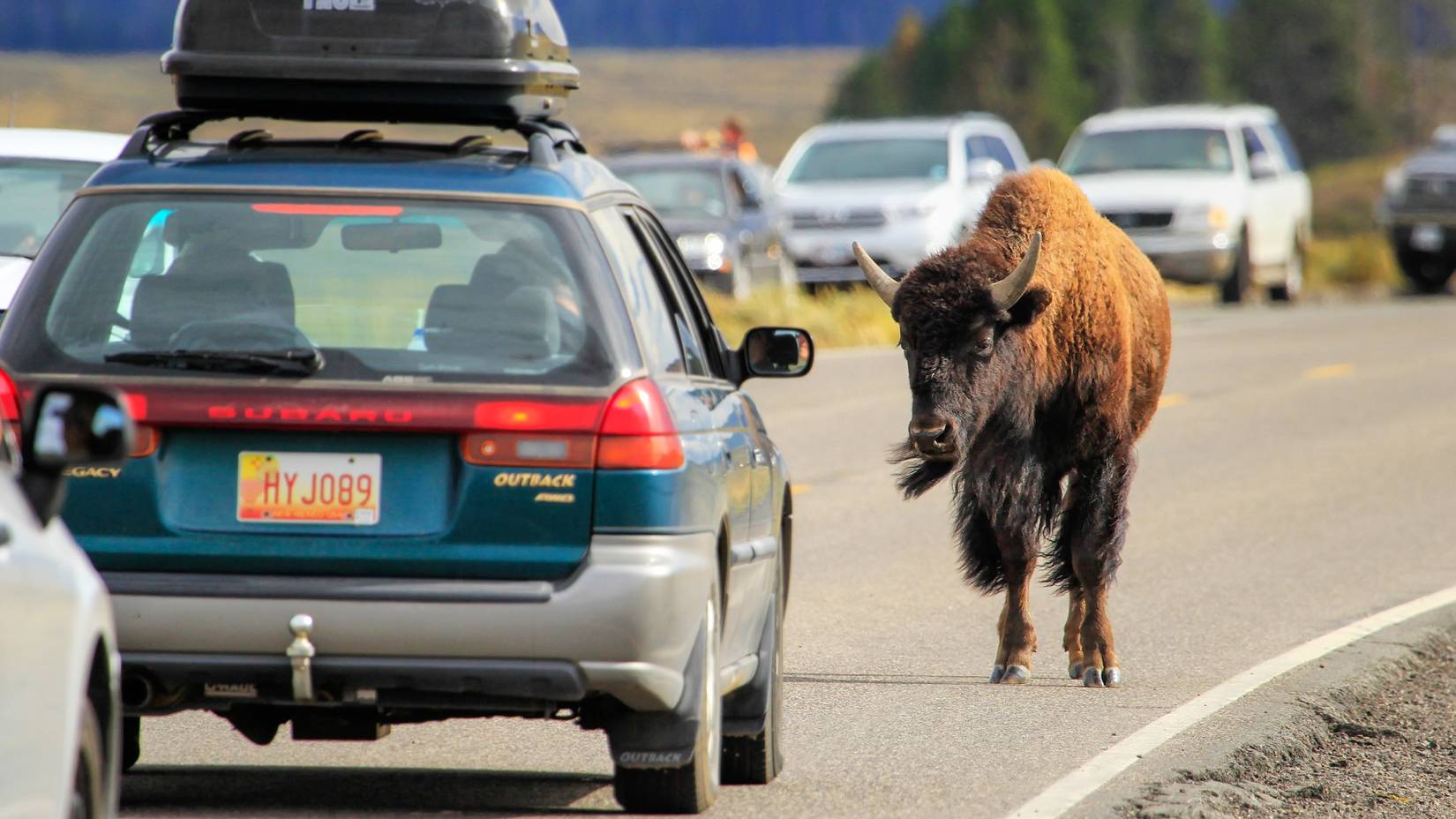
Tourists in Yellowstone can frequently end up close to bison even without actively seeking them out.
An animal might wander onto a road while a car is already there, or an entire herd can surround vehicles and bring traffic to a stop. That is precisely why Yellowstone’s advice for drivers emphasizes patience rather than trying to maintain 25 yards of distance at all costs once safely inside a vehicle.
Officials say not to stop on roadways simply to get a good look at wildlife, however. Anyone deliberately pulling over to watch animals should use designated pullouts and park with all four tires completely to the right of the white line.
Drivers should also avoid using their car horn as a way to hurry bison along. Visitors should stay in their vehicles and allow the animals to move at their own pace.
Given that the park’s bison rut is just getting started, everyone else visiting over the next several weeks would be better off letting the animals win any traffic disputes — even if that means shelling out for a new tire