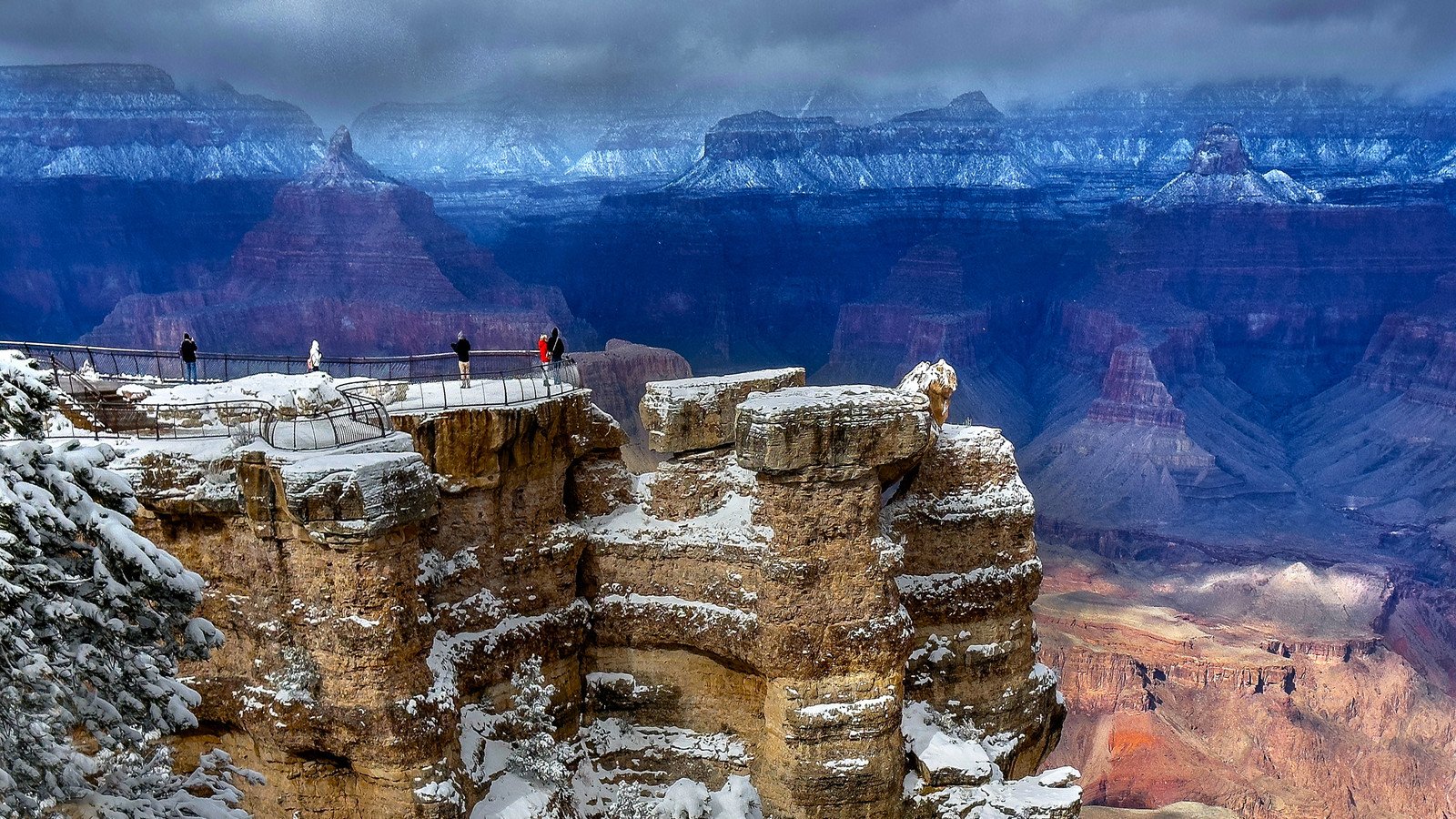
The Grand Canyon National Park has suffered a punishing few years. In 2024, rangers recorded the highest death toll since it was established. In 2025, the Dragon Bravo fire destroyed thousands of acres of land in the North Rim Area, and record-challenging summer heat in 2026 has resulted in repeated heat advisories aimed at protecting visitors.
Despite the challenges that the Grand Canyon has already faced this year, a new threat, orchestrated by a White House Executive Order and the Department of the Interior (DOI), has appeared on the horizon.
In a landmark action, the Bureau of Land Management (BLM) approved the construction of a data center on federal lands located in Southern Nevada. What is particularly concerning is that it will be drawing massive amounts of water from the already strapped Colorado River Basin. Though further downstream, these are the same waters that the Grand Canyon utilizes to quash the climate change-fueled threat of another massive wildfire.
Thankfully, opponents to the project have filed a challenge with the DOI that aims to block its construction completely. If the appeal is successful, it would have the latent benefit of preserving the already tenuous water resources not only in southern Nevada, but also further downstream in the Grand Canyon and beyond.
An Appeal Was Filed To Block The Construction Of A Data Center That Threatens The Grand Canyon
In July 2025, the White House issued Executive Order 14318, Accelerating Federal Permitting of Data Center Infrastructure. The order lays out the administration’s plan for the “expeditious and orderly development of data centers” on federally owned lands, predominantly through bypassing the National Environmental Policy Act (NEPA) and other environmental protections. EO 14318 led directly to BLM’s approval of the Townsite Data Center for which nearly 90 acres of federal land have been allocated in Boulder City, Nevada.
Unfortunately for proponents of the project, the Sierra Club and The Center for Biological Diversity believe that BLM “sidestepped environmental review laws by using a prior authorization for a solar project at the same site to fulfill requirements for authorizing the data center,” and should not be permitted to continue the initiative. On July 27, they filed a formal appeal with the Office of Hearings and Appeals at the DOI that seeks to block the project from progressing. Boulder City has also filed a similar appeal.
“It’s an outrage that the Trump administration is giving away our public lands to hedge funds for data centers. Public lands are for wildlife and clean water, for recreation and spiritual renewal. They’re not meant for big tech companies to spew air pollution and suck down water for AI and the surveillance state,” said the Great Basin director at the Center for Biological Diversity, Patrick Donnelly.
The Townsite Data Center is set to be built in a valley that acts as the habitat of the desert tortoise, and would draw upon the Colorado River Basin for its massive water requirements; a river already so stressed beyond its capacity that the Department of Reclamation has issued water management initiatives along it in three states that will force usage reductions that could exceed 30%.
The Grand Canyon National Park relies on the same water for its operations and fire suppression, the latter being an increasingly pervasive threat to itres very existence.
The Dragon Bravo Fire Changed The Grand Canyon Forever
On Independence Day 2025, a lightning strike ignited a fire on the North Rim of the Grand Canyon. Even though NPS and local firefighters responded immediately to the blaze, it nonetheless burned for nearly three months, taking campsites, roads, trails, flora, fauna, and the Grand Canyon Lodge with it.
Over 70 buildings – including cabins, administrative outposts, and the North Rim Visitor Center – were lost. Recreation near the North Rim was eliminated until October, when the first few roads and trails began to reopen, followed by the reopening of select campgrounds in November.
And yet, despite the valiant efforts of the limited remaining NPS rangers and firefighters who managed to extinguish and restore the park, the DOI, rather than commend them for their massive achievements, blamed them for the destruction the fire caused.
That same agency that nearly halved the resources available to maintain the Grand Canyon is now colluding with the White House to threaten the park further. Without the former level of staff and budget that it had formerly enjoyed, nearly 150,000 acres were lost to a wildfire. The approval of the Townsite Data Center now threatens the one crucial element they need to prevent this type of wildfire from happening again, and the only resource in the park that has yet been left untouched by the executive branch: water.
A Fire Like Dragon Bravo Could Happen Again In Grand Canyon National Park
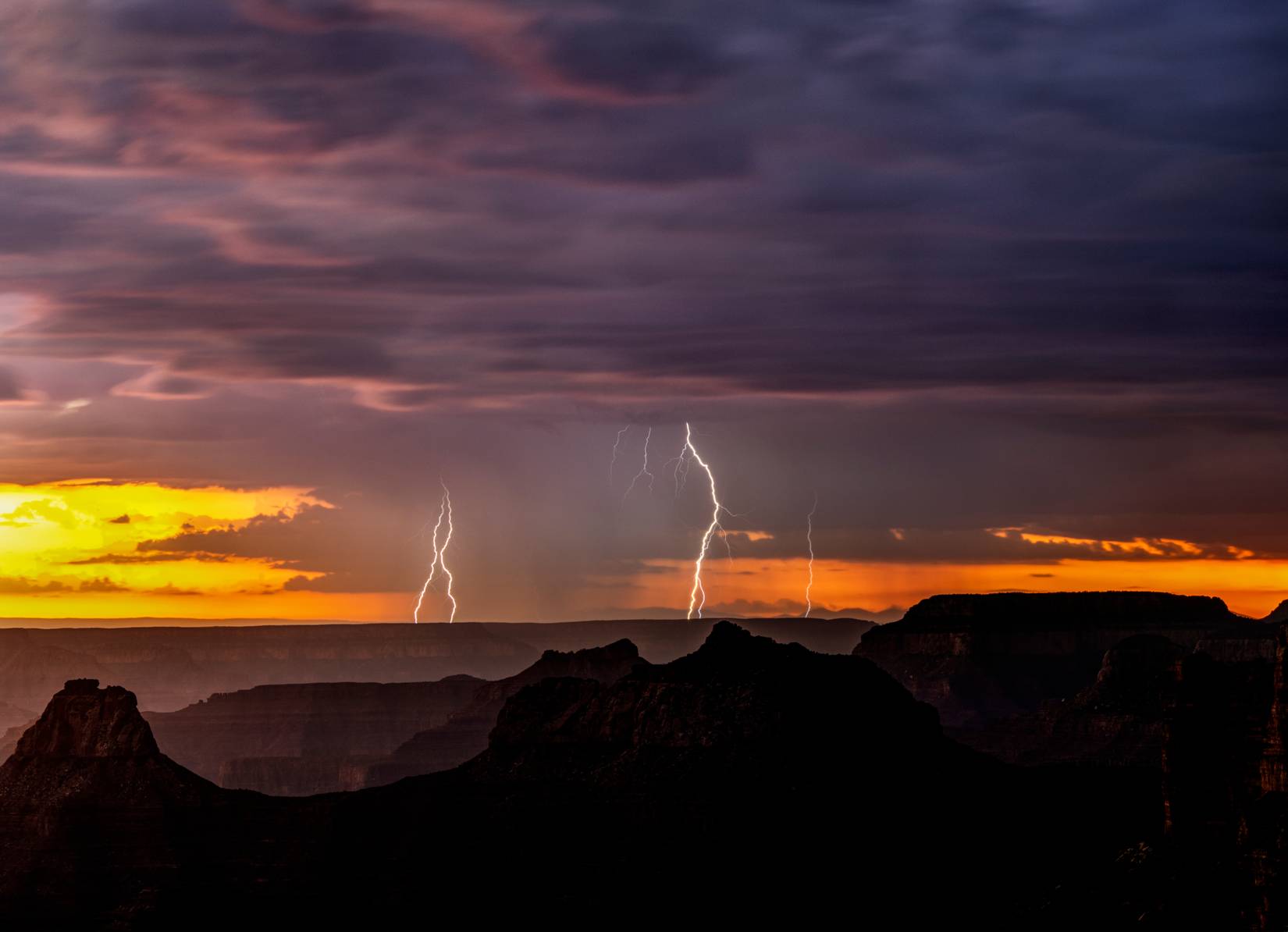
While the Dragon Bravo Fire was the first of its kind in Grand Canyon National Park history, it was not necessarily its last. Climate change has fueled significant warming in the American Southwest; the Grand Canyon specifically has become increasingly dangerous, with temperatures on exposed rock surfaces in the Inner Canyon reaching up to 140 degrees Fahrenheit.
Not only has the rise in temperature led to more fatalities in the park related to heat illnesses, it has contributed to the acceleration of wildfires. Higher temperatures mean less water retention in the already parched desert soil, which creates an environment primed to ignite when lightning strikes.
The construction of the Townsite Data Center could funnel the water needed to contain fires in Grand Canyon National Park away, and thus could potentially lead to its further destruction.
In addition to the massive draw on water resources, the appeal lists several more reasons the data center project should not be allowed to move forward. Among them are the draw on electricity, the increase in ambient local temperature, and the potential for noise pollution and wastewater to damage the local ecosystem. But most importantly to the appeal, many of the possible harms it could produce are unknown, as it was approved without any additional environmental hazard studies nor input from the public.
“Trump is sidestepping the law and shutting the public out of decisions about our public lands. By cutting the public out of the process, they’re trying to hand over Nevada’s desert to billion-dollar tech companies without anyone getting a say. If this isn’t challenged, it won’t stop in Boulder City — it will become the blueprint for data centers across public lands in the West. We’re fighting to make sure that never happens,” said the executive director at the Sierra Club Toiyabe Chapter, Olivia Tanager.
Not only could this appeal save the Grand Canyon and help protect the tourists who visit it, but it has enormous potential to set a powerful precedent that could add more guardrails to protect federal lands across the nation. At the very least, the people who will be affected by data centers should have a say in their construction, and this appeal hopes to deliver that and more.