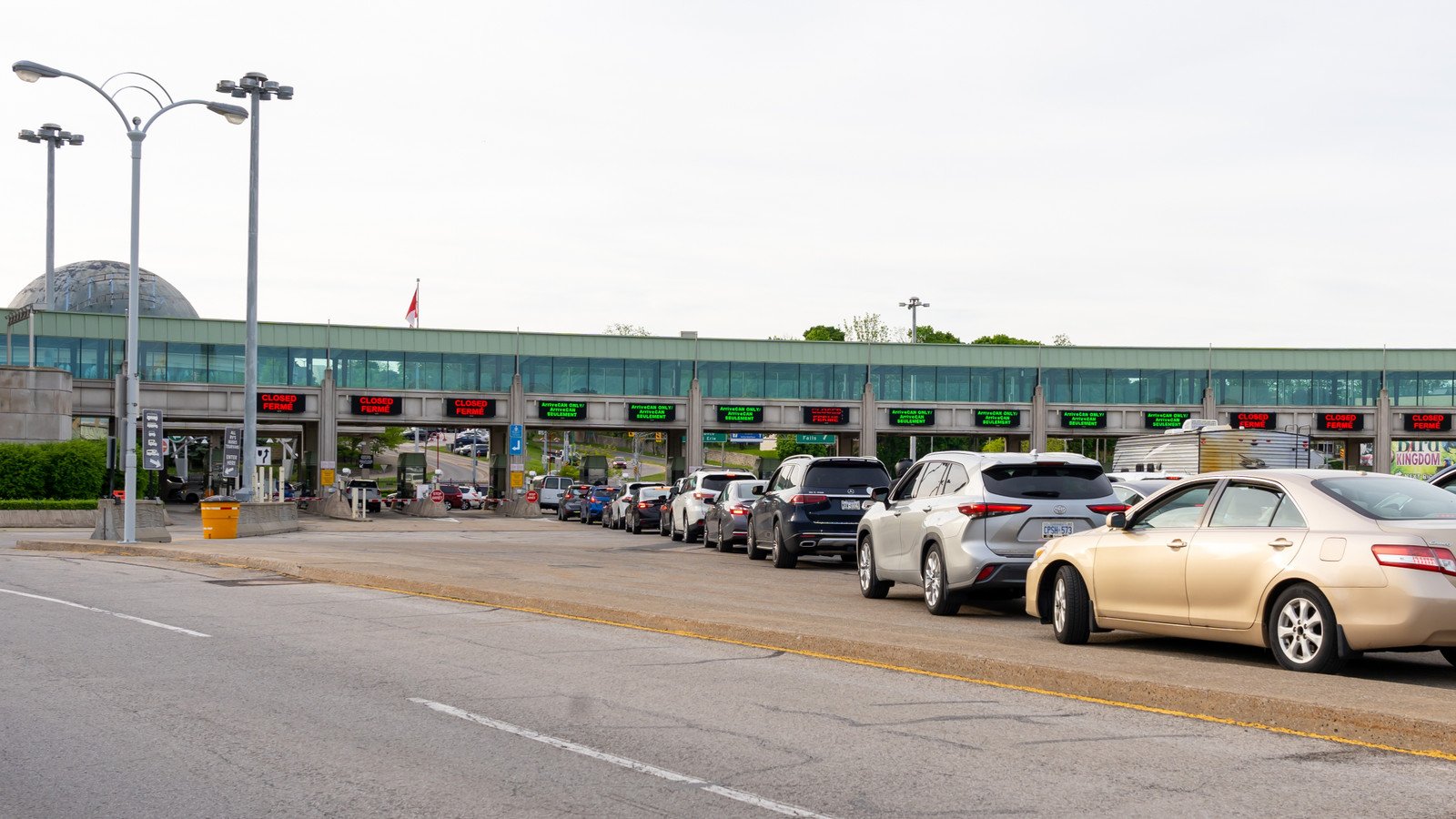
According to data from the U.S. Department of Transportation (DOT), Maine is seeing a modest rebound in Canadian tourism traffic after more than a year of declines. This was one of the states that had been hit the hardest by Canada’s U.S. travel boycott, which began after U.S. President Donald Trump referred to Canada as a possible 51st U.S. state.
Last summer, Maine lost a significant number of Canadian tourists, almost matching its entire population. While the situation is now improving, it will likely take a long time for Canadian tourist numbers to return to 2024 levels.
Maine Experiences Slight Increase In Canadian Crossings
In June 2026, Maine border crossings saw a slight increase in the number of Canadian travelers compared to the same period in 2025. While last year 108,934 Canadian vehicles entered the U.S. via Maine, this year the figure increased to 119,970. According to Kim Howard, executive director of Old Orchard Beach Chamber of Commerce, businesses in the area are also starting to notice growth.
“I’ve definitely been answering questions with more Canadian accents the past few weeks. So yeah, I believe we are seeing a few more than we had last year,” Howard told Maine Public.
These numbers appear to confirm Statistics Canada’s figures, which indicate that Canada’s U.S. travel boycott is now stabilizing. This new trend is likely to be welcomed positively by Maine citizens working in the tourism sector, as the state lost nearly one million Canadian tourists last summer.
Maine’s Decline in Canadian Tourists Nearly Matched the State’s Entire Population During The Travel Boycott
Canada’s U.S. travel boycott didn’t affect all U.S. states equally, as those near the border often experienced the largest declines. In March, Chellie Pingree, who represents a Maine congressional district that includes destinations popular with Canadians, such as Old Orchard Beach, Portland, and Kittery, told CBC News that the state lost nearly one million visitors in 2025.
“Just to put it in perspective, our state has 1.5 million people,” Pingree said. “So to have that many less people coming across the border, whether it’s Canadian tourists or people who come for shopping or family visits, it’s really been doing damage to our state,” Pingree said.
According to Pingree, Maine experienced a 27% drop in border crossings, which had drastic consequences for the state’s tourism sector. The decline prompted Governor Janet Mills to issue a message to Canadians, reminding them that they are more than welcome in Maine. “Well, I’ve been speaking to some of my Atlantic Province Canadian counterparts, and I want to reassure them every day that Maine will continue to welcome Canadian residents to enjoy world-class experiences here in Maine. And that in turn, we’ll continue to visit their provinces as well,” the message read.
The message may be working — crossings are now beginning to rebound. At present, it is still unclear when Canadian numbers will once again match pre-2025 levels.
Canada U.S. Travel Boycott Is Stabilizing, But The Future Remains Uncertain
According to the U.S. Travel Association, the U.S. saw a 21% drop in Canadian tourists in 2025 compared to the previous year. Current Statistics Canada data now suggest that the boycott may be stabilizing. In April 2026, the number of Canadian residents crossing into the U.S. increased for the first time since early 2025.
|
Period |
Canadian visitors to the U.S. |
|---|---|
|
December 2025 vs. December 2024 |
-25% |
|
January 2026 vs. January 2025 |
-22% |
|
February 2026 vs. February 2025 |
-12.5% |
|
March 2026 vs. March 2025 |
-7.6% |
|
April 2026 vs. April 2025 |
+1.8% |
|
May 2026 vs. May 2025 |
+9.5% |
Since then, numbers have kept growing. For instance, in June 2026, 1.7 million Canadian citizens returned from trips to the U.S., representing a 3.2% increase over June 2025. However, it is important to note that these numbers remain well below 2024 levels. Compared to June 2024, this June saw 28.7% fewer Canadian visitors traveling to the U.S.
Despite this, U.S. tourism representatives remain optimistic. A forecast published by the U.S. Travel Association in May states that, “The recovery in 2026 is expected to be uneven across markets. Visits from Canada are projected to increase after a 21% volume decline in 2025.”
In addition, President Trump’s newly appointed special envoy for tourism, Nick Adams, has recently set a new target for the U.S. tourism sector. He is now hoping to attract 100 million visitors by 2030, aiming for 46% growth in just five years. During the May U.S. Travel Association’s IPW conference, Adams said the Trump administration would do everything in its power to increase visits from foreign countries.
“I will do everything in my power to make sure that our policies are policies that don’t discourage tourism from the places that have been so good to the industry,” he said, as reported by Travel Weekly.
At present, however, it remains unclear whether this goal is attainable. A May survey by the Business Development Bank of Canada (BDC) found that 70% of Canadian travelers have no intention of returning to the U.S. for their vacations. Businesses and residents in Maine are cautiously optimistic about the rebound in Canadian crossings; recent data suggest it may still be too early to celebrate.