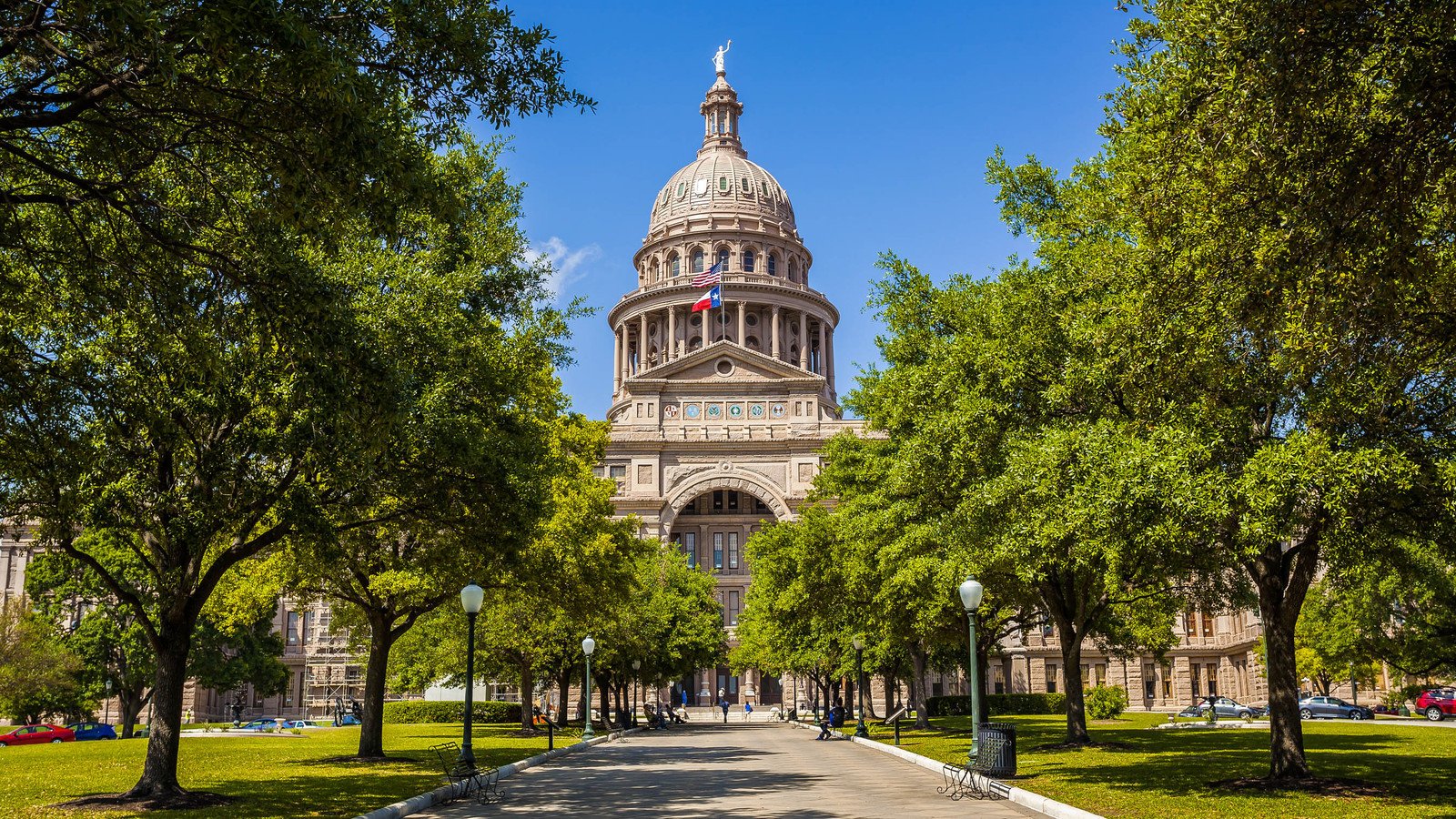
A Spanish-language billboard near the Texas-Mexico border appeared to offer expectant mothers a straightforward package: travel to Texas and give birth at an American hospital for less than $6,000.
The advertisement listed one price for a vaginal delivery and another for a Cesarean section. It also directed customers to a website called “Have My Baby in Texas,” according to a Fox News report.
What the billboard didn’t explicitly mention was the benefit at the center of the backlash that followed. Under current law, almost every child born on United States soil automatically becomes an American citizen.
The hospital advertisement has since disappeared, but the surrounding controversy has not. The U.S. government has been cracking down on American citizenship through new passport regulations and increased citizenship application fees. The government also recently warned pregnant tourists traveling to America that they would face increased scrutiny over suspected “birth tourism.”
Now, Texas Republican Representative Brandon Gill is proposing a law that would deny birthright citizenship to certain children whose parents entered the country illegally or traveled primarily to give birth.
A Texas Billboard Put Birth Tourism Back In The Spotlight
After photographs circulated of the billboard promoting the Women’s Center at Mission Regional Medical Center in Mission, Texas, the topic of birth tourism and birthright citizenship was once again in the spotlight.
Mission sits close to the Mexican border, just about 10 miles from Reynosa, Tamaulipas.
The advertisement, written in Spanish, listed births starting at $3,950 and Cesarean sections at $5,525. It also displayed an international phone number and promoted a “Have My Baby in Texas” website.
The billboard didn’t mention anything about U.S. citizenship. Mission Regional later said the campaign was discontinued to avoid misunderstandings.
But that didn’t stop Texas officials from taking a closer look.
Governor Greg Abbott directed the Texas Health and Human Services Commission to investigate whether the hospital had marketed maternity packages to foreign nationals hoping to secure American citizenship for their children.
The images of the billboard quickly became part of a wider political argument over whether foreign nationals are exploiting U.S. citizenship rules.
Representative Gill called the situation “astounding,” according to Fox News.
His congressional task force had already been investigating companies that advertise American maternity and travel services to foreign customers. Those businesses reportedly include operations in Miami and other parts of the country.
The U.S. Citizenship Act of 2026 Would Use One Word To Change Who Qualifies For Citizenship
Gill introduced H.R. 9854, known as the Citizenship Act of 2026, in late July.
The bill doesn’t propose a constitutional amendment. Instead, it attempts to place certain individuals within one of the exceptions to birthright citizenship already recognized under current American law.
It would do this by defining them as “invaders.”
The 14th Amendment grants citizenship to people born in the U.S. and “subject to the jurisdiction thereof.” Children of foreign diplomats and members of an occupying enemy force have historically been treated as exceptions to that rule.
U.S. Senator Jim Banks introduced nearly identical legislation about a week earlier with S.4954, also called the Citizenship Act of 2026.
Gill’s proposal would declare several additional groups as invaders for citizenship purposes.
- Mother entered the U.S. without lawful admission
- Mother entered legally but is unlawfully present
- Mother entered primarily to give birth in the U.S.
- Certain foreign nationals using a paid U.S. surrogate
The bill would not require a parent to be convicted of birth tourism before the child was affected. A consular officer or the U.S. Attorney General could determine that someone sought admission or an immigration-status change primarily to give birth in the U.S.
Gill argues that Congress has the power to make that distinction without amending the Constitution.
“Courts have long understood that the children of invaders are not subject to birthright citizenship,” he told CBS Texas. “That’s not disputed on either side of the aisle. That’s been case law for quite some time. What this does is it simply clarifies that illegal aliens and birth tourists fall under that category.”
Critics are likely to challenge whether an undocumented immigrant or a pregnant tourist can legally be equated with a foreign soldier occupying U.S. territory.
Trump’s Latest Birthright Citizenship Attempt Failed
Gill’s proposal comes after Trump recently attempted again to restrict birthright citizenship through executive action.
That effort failed in court.
The Supreme Court ruled that children born in the U.S. to parents who are unlawfully present or temporarily visiting remain subject to American jurisdiction and qualify for citizenship under the 14th Amendment.
The ruling reinforced a longstanding interpretation of the Citizenship Clause. Someone visiting the U.S. must still obey U.S. law, even when they’re not a permanent resident. Their child is therefore generally born under American jurisdiction.
Gill’s bill is designed to test a different approach. Rather than relying on presidential authority, it asks Congress to define unauthorized immigrants and birth tourists as invaders. Supporters believe that designation could move their children into an existing constitutional exception.
That theory would almost certainly face an immediate legal challenge.
The bill also attempts to limit judicial review of decisions declaring that an invasion exists. But Congress can’t necessarily prevent federal courts from deciding whether legislation violates the Constitution just by including language saying the issue can’t be reviewed.
For now, H.R. 9854 has only been introduced and referred to the House Judiciary Committee. It has not passed the House or Senate.
How Many Babies Are Born Through Birth Tourism In The United States?
No federal U.S. agency keeps a definitive count of babies born through birth tourism. That makes it difficult to determine how many future children could be affected by Gill’s bill.
Birth records may identify mothers who normally live outside the U.S. They don’t necessarily establish why those women were in the country to start with.
A foreign resident could give birth unexpectedly while traveling, come for specialized medical care, or deliberately plan the trip with the intention of obtaining citizenship for their child. A traveler might also list a temporary American address, making the birth harder to identify in national data.
Available estimates therefore measure different things.
|
Estimate |
Approximate Annual Births |
Important Note |
|---|---|---|
|
NCHS/Pew foreign-resident figure, 2023 |
Includes all mothers normally residing abroad; it does not establish that they traveled primarily to obtain citizenship |
|
|
Center for Immigration Studies |
Outside estimate based on assumptions about tourist and temporary-visa births; not an official federal count |
|
|
Pew estimate involving unauthorized mothers, 2023 |
Covers a much broader population than birth tourists and applies where the father was neither a citizen nor permanent resident |
The 20,000-to-26,000 range is one of the most frequently cited estimates aimed specifically at birth tourism. However, that figure is still contested and represents less than 1% of total annual births in the country.
Gill’s bill could have a wider impact because it doesn’t stop with tourists.
It also aims to cover children born to mothers who are unlawfully present when the father is neither an American citizen nor a lawful permanent resident. That could affect hundreds of thousands of births in a single year if the legislation goes through. For example, someone who has been living in the U.S. for years could be declared an “invader” after giving birth if their status is determined to be invalid at the time of the birth.
However, it’s important to note that the legislation isn’t retroactive, so it would not cancel the existing citizenship of people already born in the U.S.
Birth Tourism Can Already Lead To Visa Denials
Traveling while pregnant isn’t illegal. Neither is giving birth at an American hospital while visiting the country.
The legal issue generally comes up when someone applies for a tourist visa with the primary intention to give birth in the U.S. or lies to immigration officials about their reason for visiting.
Since 2020, State Department rules have instructed consular officers to deny visitor visas when they believe an applicant’s primary purpose is traveling so a child can obtain citizenship.
Travel for legitimate medical treatment can still be allowed. Applicants may be required to show that they can pay for their treatment and that the medical care is the genuine purpose of the visit.
Companies can also come under scrutiny when they allegedly coach customers to conceal their plans, commit visa fraud, or avoid paying hospital costs.
Gill, who chairs the House Oversight Committee’s Task Force on Defending Constitutional Rights and Exposing Institutional Abuses, says his panel has subpoenaed multiple companies as part of a possible criminal-conspiracy investigation.
He argues that birth tourism abuses both immigration law and American institutions.
“We are the ones who often end up picking up the tab for a lot of these services,” Gill told Fox News.
Gill also argued that birthright citizenship was adopted after the Civil War to protect formerly enslaved people and their descendants, not to provide citizenship through planned maternity travel.
That interpretation is politically powerful among the bill’s supporters. Whether it’s constitutionally sufficient is a different question.
But before anything can happen, Gill’s bill would need to pass Congress, receive presidential approval, and survive a constitutional challenge under a Supreme Court ruling that has already rejected a similar result.