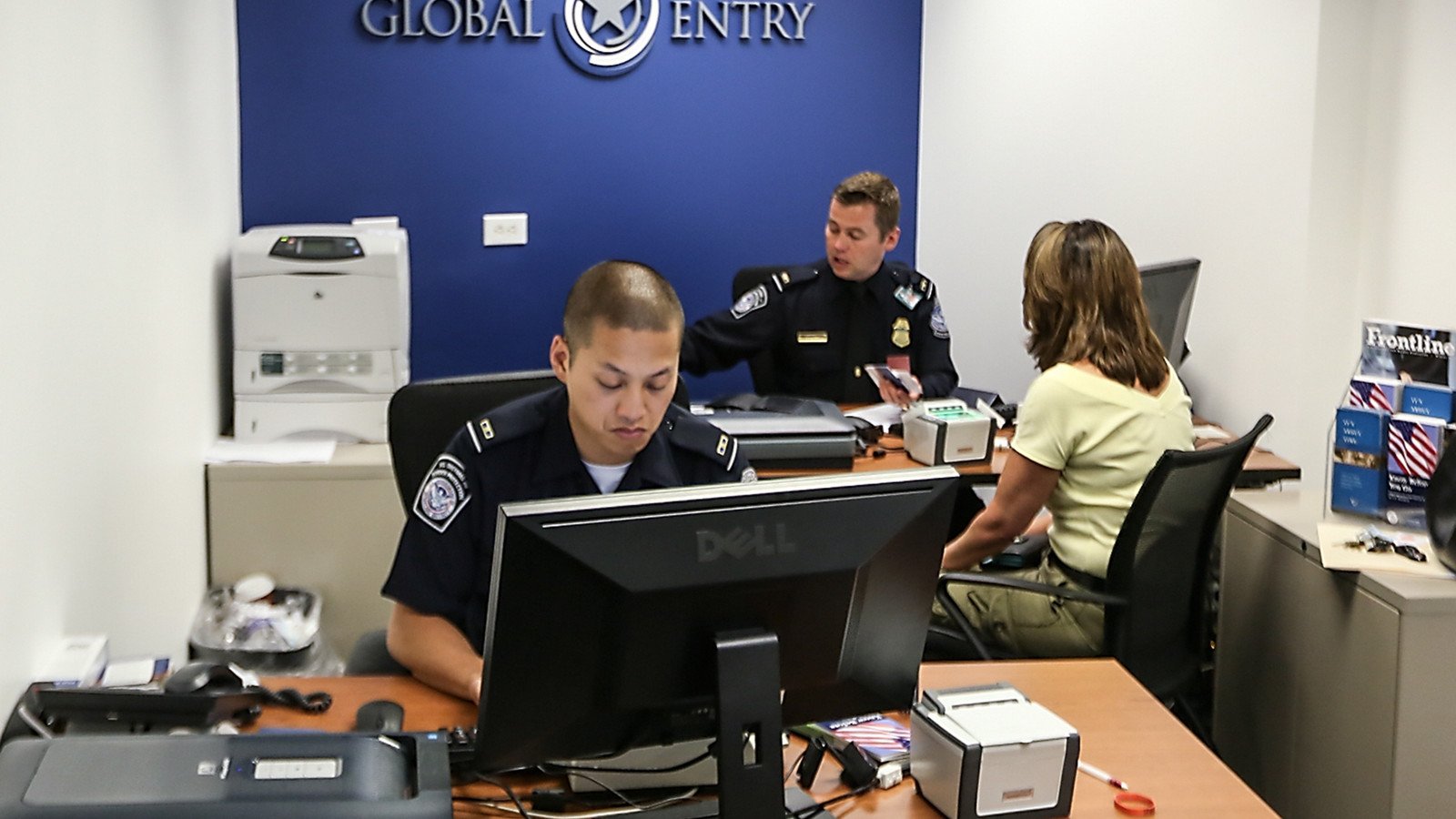
A lawsuit was filed in the Southern District of California on Friday that alleges that the Department of Homeland Security (DHS) is keeping a secret database of American citizens who observe Immigration and Customs Enforcement (ICE) agents. The plaintiffs claim their preferred traveler credentials – TSA PreCheck and Global Entry – were revoked, and that this was done by DHS in retaliation for filming ICE agents.
Filming public officials, like ICE agents, is protected by the First Amendment provided it does not impede an investigation. DHS is claiming that the revocation of the plaintiffs’ Trusted Traveler enrollment was not retaliatory, though they have not yet provided a statement that definitively declares that the decisions were wholly unrelated to their encounters with ICE.
Privacy Advocates Are Suing The Department Of Homeland Security
The Electronic Privacy Information Center (EPIC), Anna Walker, Jacquelyn Ivey, and Nicole Cleland are suing DHS for violating the Privacy Act, the Administrative Procedure Act, and the First Amendment. They have retained Democracy Forward and Hagens Berman Sobol Shapiro LLP to represent them in a class-action lawsuit in the state of California.
Specifically, the plaintiffs allege that DHS revoked their Trusted Traveler status as a form of retaliation for legally filming ICE agents in public. They claim that the revocation of their membership proves both that ICE is surveilling American citizens illegally, and that they are then sharing this illegally obtained information with other departments and agencies.
“Plaintiffs allege that the U.S. Department of Homeland Security (DHS) has adopted a secret policy to collect, maintain, and use personal information about people engaged in activity protected by the First Amendment,” reads a statement from Democracy Forward.
The plaintiffs believe that ICE agents are utilizing facial recognition technology and license plate identification to identify and catalog American citizens who observe or film ICE agents. They claim that ICE is then sharing that information within DHS.
The Department of Homeland Security May Have Violated The Privacy Act

The Privacy Act prevents government agencies from surveilling American citizens for exercising their First Amendment rights without transparency, save in very limited circumstances.
“The Privacy Act places clear limits on the government’s ability to collect and maintain records about people based on their protected First Amendment activities. This lawsuit seeks court intervention to enforce those protections and ensure the government complies with the law,” said Steve Berman, Managing Partner at Hagens Berman Sobol Shapiro LLP.
If DHS is found to have used information about citizens obtained by ICE through illegal surveillance, the agency could be found to have violated not only their own internal policies, but also federal law. If they are ultimately proved liable for the claims in the suit, any systems used by ICE to gather information on civilians found to be in breach could potentially be vacated.
The Plaintiffs In The Suit Speak Out
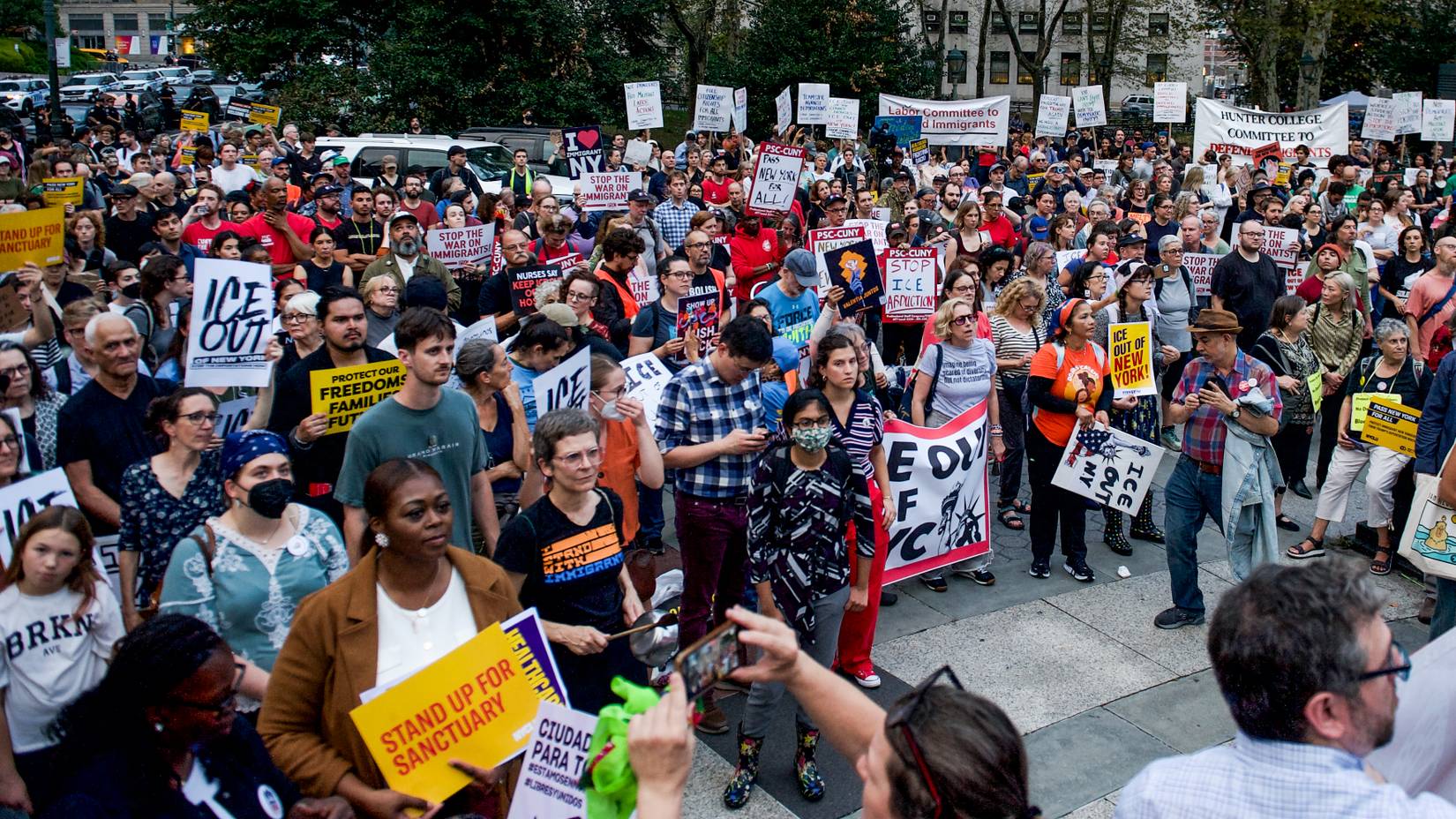
Last April, plaintiff Anna Walker was accosted by ICE after filming them in a Target parking lot in San Diego. They boxed in her car and filmed her face and license plate. They only allowed her to drive away after she called 911.
Five days later, her Global Entry membership was revoked, though she never identified herself to the ICE agents nor gave them her driver’s license. Her enrollment was reinstated after she told her story to a reporter who contacted DHS for comment.
“Now more than ever, those of us who have the privilege to speak out have a responsibility to defend the rights of everyone in our communities. When people are punished for exercising their First Amendment rights, we begin losing the democratic principles that protect all of us. Every American should be alarmed by retaliatory action against one’s free speech,” said Anna Walker in a statement published by Democracy Forward.
Another one of the plaintiffs, Jacquelyn Ivey, had a similar encounter in South Carolina. Her Global Entry was revoked 10 days after her interaction with ICE agents, despite observing them legally.
“This isn’t about losing a privilege; this is about standing on principle. The government is trying to intimidate people into looking the other way instead of holding it accountable. But the moments when those in power try hardest to silence us are often the moments we most need to speak up,” said Jacquelyn Ivey in a statement published by Democracy Forward.
Nicole Cleland was observing ICE agents in Minnesota last January when an agent approached her, addressed her by name, and claimed to be using facial recognition technology via his body cam before threatening to arrest her.
“I believe government accountability starts with transparency. People should be free to peacefully observe and document what their government does in public without worrying they’ll be tracked or retaliated against. This case is about protecting that right for everyone,” said Nicole Cleland in a statement published by Democracy Forward.
Three days after her interaction with ICE, Cleland received notice that her Global Entry membership was revoked, and was not provided any explanation. Other than being confronted by ICE agents, she had no other encounters with law enforcement, and had maintained her Trusted Traveler status since 2014.
The aggregate of these plaintiffs’ stories led their counsel to believe that ICE is, in fact, using illegal surveillance technologies and tactics against American citizens and residents, and now they seek to prove it in court.
“The federal government cannot build secret dossiers on people because they exercise their First Amendment right to peacefully observe, document, or criticize its actions. That is exactly the kind of government surveillance Congress sought to prevent when it enacted the Privacy Act after some of the darkest chapters in our nation’s history,” said Skye Perryman, President and CEO of Democracy Forward.
With the suit, they are seeking to ban ICE from their surveillance activities, compel the agency to delete any personal information they have yet retained, and compensate the plaintiffs for any legal fees and court costs they have incurred.
The Department of Homeland Security Denies Any Wrongdoing
The accusation that DHS is keeping a database of Americans is not new.
In February, the inspector general of DHS launched an investigation into ICE’s use of surveillance technology after prodding from Senators Mark Warner and Tim Kaine. Shortly after, Senators Ed Markey, Ron Wyden, Jeff Merkley and Representative Pramila Jayapal introduced the ICE Out of Our Faces Act, which would put restrictions on the use of biometric data by ICE and its agents.
A few weeks later, plaintiffs Colleen Fagan and Elinor Hilton filed a similar class-action lawsuit in the state of Maine, alleging that they were illegally surveilled by ICE, and were told things by agents like “we know where you live,” and “we’re going to come to your house later tonight.”
Despite a number of ongoing lawsuits, the DHS claims no wrongdoing. They claim the revocations were not retaliatory, though they have not explicitly stated the decisions were independent of the ICE encounters.
“Global Entry or other CBP Trusted Traveler Program memberships are not revoked because someone exercises their First Amendment rights. Membership may be denied or revoked for reasons such as criminal activity (including pending charges or warrants), violations of customs or immigration laws, or inability to demonstrate low-risk traveler status,” said a spokesperson for CBP to the LA Times.
The Travel reached out to DHS for comment, but did not get a response in time for publishing.
This new suit in California has the potential to set a powerful precedent that could not only positively affect the plaintiffs in the Maine suit, but all the suits levied against ICE and DHS that are currently pending around the country. A win could limit the scope of ICE’s capabilities and control their behaviors towards the American people.