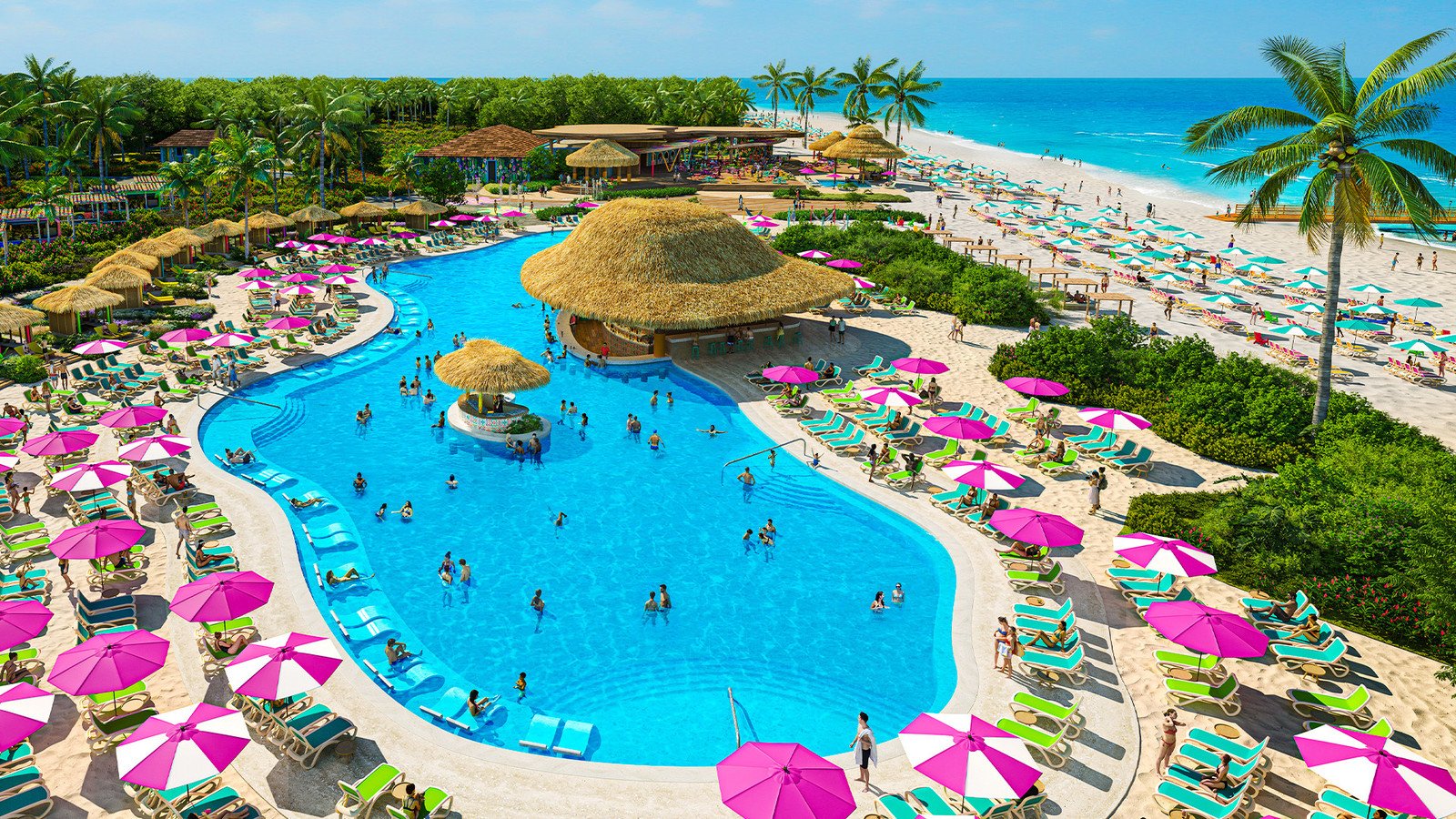
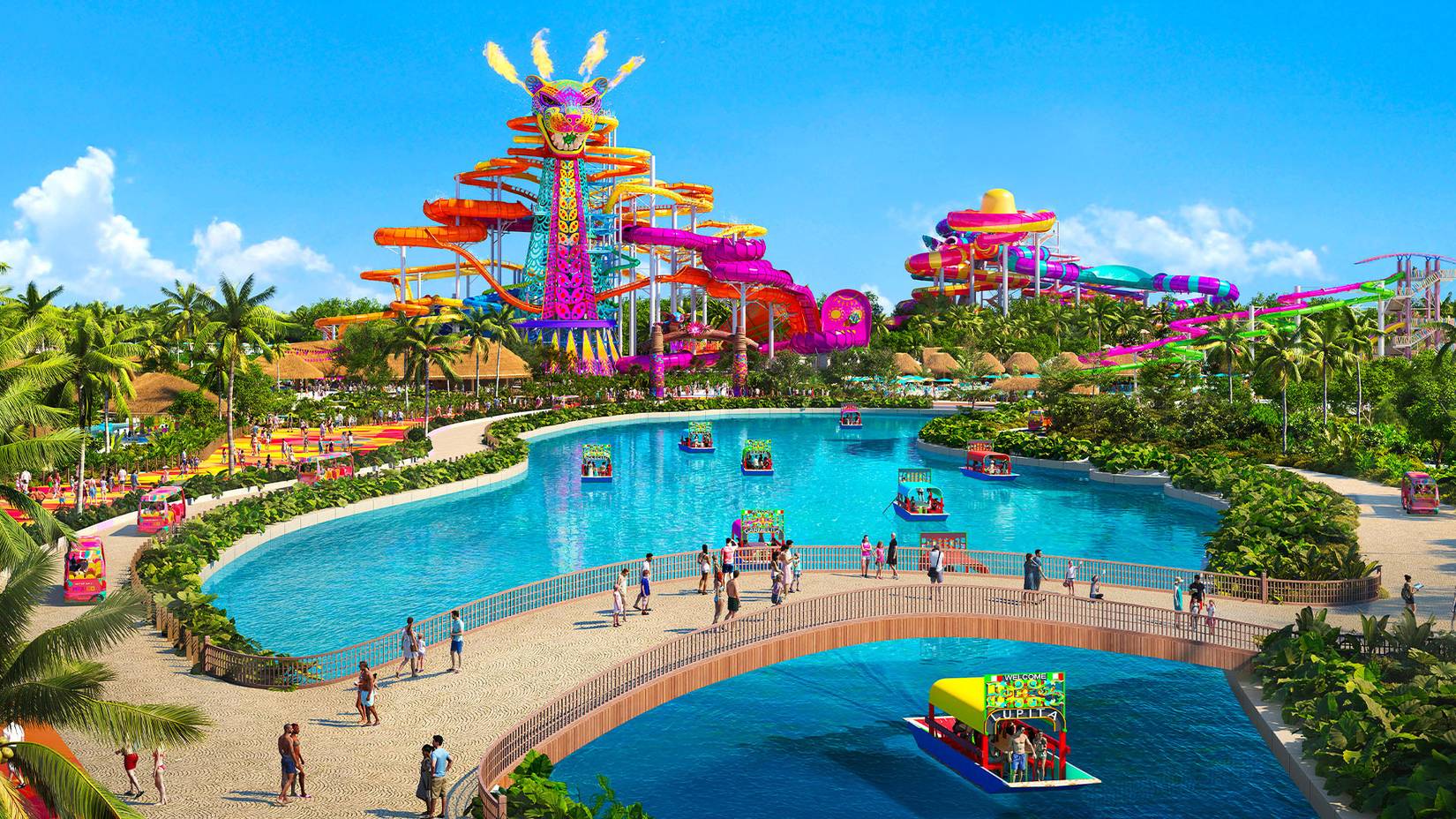
First announced in October 2024, Perfect Day Mexico was slated to be Royal Caribbean’s newest – and best – private excursion resort. While they continued to release more details throughout the winter, the citizens of Mahahual, where the resort was planned to be located, became increasingly wary about how the venture would move forward.
By August 2025, a local dive instructor started a petition to stop the project that began to gain traction quickly; by June 2026, the petition had been signed by over five million people, and gained the attention of President Claudia Sheinbaum.
Both President Sheinbaum and the predominant environmental agency in the country agreed that Perfect Day Mexico had not taken the unique ecology of Mahahual into consideration in the initial proposals for Perfect Day Mexico, and blocked its construction indefinitely.
While CEO Jason Liberty says the company is still hopeful that they can relocate the resort somewhere else within the country, the announcement that they’ll be funding the construction of a new community center in Mahahual has sparked concern that its true function is a bribe to entice the local community to allow the development to continue as originally planned.
Meanwhile, the activist behind the petition, Morgane Vainberg, remains determined to save the community she adores from the damage such a massive and heavily populated facility would bring to such a unique stretch of the Riviera Maya.
Royal Caribbean’s plans for Perfect Day Mexico were thwarted by President Sheinbaum and the Mexican environmental agency, Secretaría de Medio Ambiente y Recursos Humanos (SEMARNAT) in June. Much of the reason authorities began to reconsider the development was due to the exceptional velocity of Vainberg’s petition, which has garnered over five million signatories who disagree with the construction of the resort.
Though Royal Caribbean stayed largely silent about the backlash for months, the CEO finally addressed the status of Perfect Day Mexico while aboard the inaugural sailing of Royal Caribbean’s new Icon class ship, Legend of the Seas.
“[Perfect Day Mexico is] a complete home run for the community, whether it’s through social education, etc., we think that it is something that should be considered. But those are things that we would have to work through over time with the Mexican government,” Royal Caribbean CEO Jason Liberty told Cruise Critic.
But Royal Caribbean hardly has one sole contender; in fact, the vast majority of the backlash to the venture stems directly from Vainberg’s community-driven effort to block construction of the resort.
With this backdrop, it is easy to see why some find it unlikely that Royal Caribbean’s announcement that they’ll be building a new community center – to be named Mahahual K’iin – has holistically charitable intentions.
“Royal Caribbean today confirmed plans to advance the development of the new Mahahual K’iin Community Center, marking an important next step in creating a larger, more accessible home for programs and activities that enrich the lives of families, children and residents across Mahahual,” a July 22 statement from Royal Caribbean reads.
Some believe the community center is just a ploy by the corporation to sway public opinion in their direction.
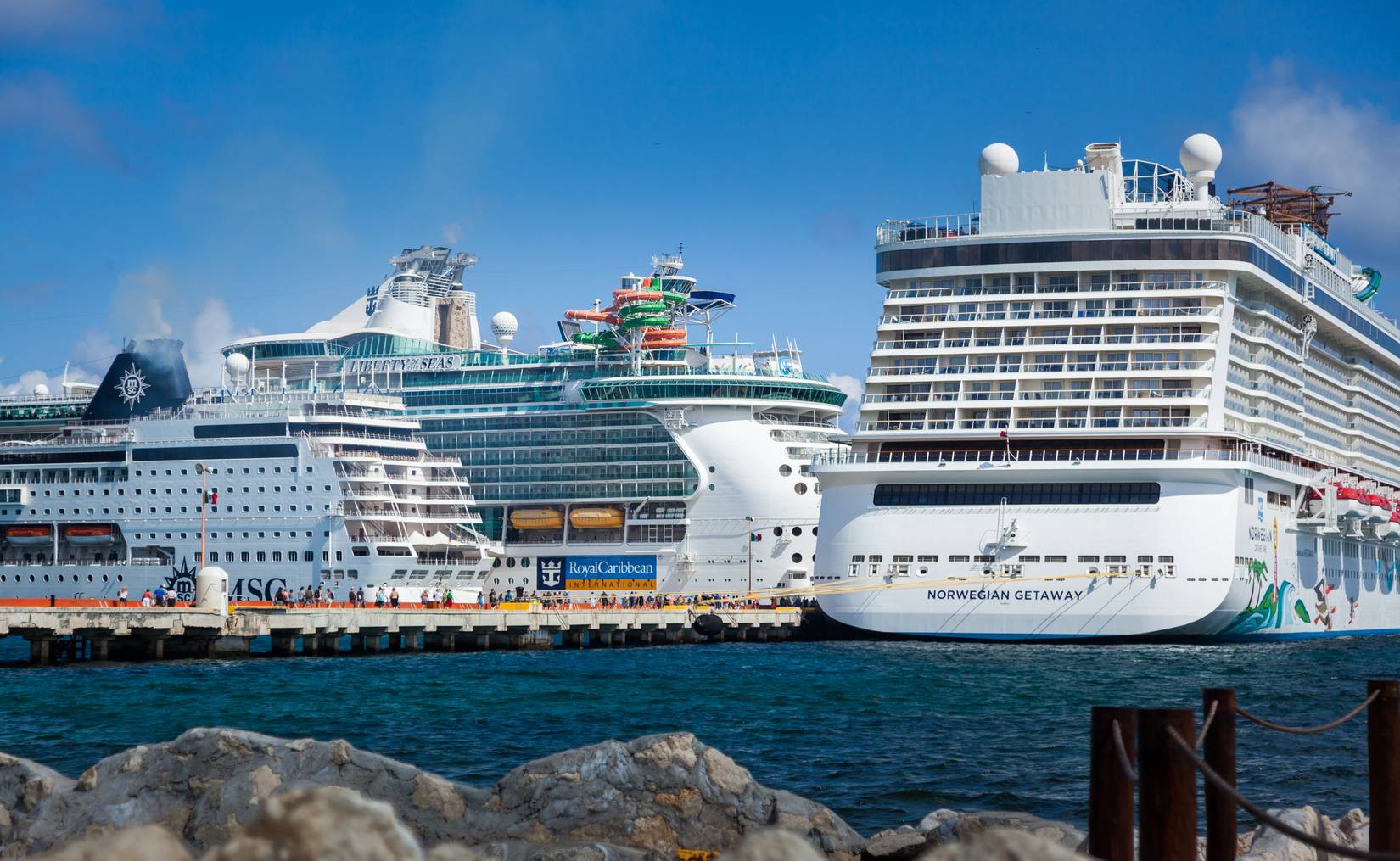
While the citizens of Mahahual would likely delight in a new community center, that’s precisely why some think Royal Caribbean has agreed to build it. Now that so many people have banded together against the project with Vainberg’s petition, the idea is that Royal Caribbean now needs the local citizenry to take their side to move forward. “The bribery is real!” one Facebook user said. Another agreed.
“Wait wait wait. They paid all that money to build Perfect Day Mexico to then get shut down for “environmental reasons,” now the Mexican government is allowing them to spend more money building the residents a community center??? Sounds like a bribe to me,” one Facebook user said.
Though the future of Perfect Day Mexico still hangs in the balance, it seems some believe that the construction of Mahahual K’iin Community Center is merely an attempt by the company to tip the scales. And while she believes the situation to be more complicated, Vainberg started her petition in part because of her distrust of the company’s messaging.
Morgane Vainberg Speaks Out About The Status Of Perfect Day Mexico
While Royal Caribbean typically trades in carefully rehearsed interviews and tactfully edited statements, Vainberg believes the complexities of the situation cannot be captured by such messaging. Vainberg told TheTravel of the importance of distinguishing between “public statements and administrative reality.”
One thing she thinks has gotten lost in the vagaries of their corporate communications is the fact that Royal Caribbean’s proposal for Perfect Day Mexico was not formally rejected by the Mexican government in a way that would prevent them from reapplying.
“This distinction also raises questions about the company’s priorities. If the central issue were truly environmental improvement, the focus would naturally be on addressing the ecological concerns raised during the review process. Instead, the discussion remains centered on whether and when the project can move forward, creating the impression that the priority is advancing the project rather than reconsidering whether it is suitable for this particular ecosystem,” Vainberg told TheTravel.
Her concerns center around the worry that Royal Caribbean is spending more time swaying opinion than practically producing a positive impact on the Riviera Maya.
“Mahahual is not an empty space waiting to be developed. It is a living ecosystem and a community with its own identity, challenges and opportunities. We have already seen the consequences of uncontrolled tourism development in places such as Tulum. The question should not be how quickly we can reproduce the same model in new places, but whether we can imagine a different form of development before the damage is done,” Vainberg told TheTravel.
While you could argue that Royal Caribbean’s pledge to construct the Mahahual K’iin Community Center is a step in that direction, it is the corporation’s intent that she still questions.
“I believe Mahahual deserves development, but development does not have to mean sacrificing the ecosystems and cultural identity that make the place unique. Many local actors are currently working through dialogue and community-based initiatives to imagine a different future for Mahahual. The challenge is not a lack of ideas or willingness, it is often a lack of financial and institutional support to make these alternatives competitive with large-scale foreign investment,” Vainberg told TheTravel.
In a statement emailed to TheTravel, senior analyst for BNP Paribas Equity Research, Xian Siew, characterizes Royal Caribbean’s announcement to build the new Mahahual K’iin a “step towards a larger plan for investment in supporting the community,” though the messaging seems to support Vainberg’s more pessimistic take.
“The Mexican government had initially refused to approve the project based on environmental concerns and the impact to the local community. We think RCL’s investment in the region starting with the community center likely is done to help address these concerns. As such we think this is a positive development. Even though we think the probability the project goes ahead is now higher, we think a delay is likely,” Siew said in a statement to TheTravel.
Here we see proof that Vainberg is not the only actor in this scenario that views Royal Caribbean’s community-centered actions in Mahahual as merely another tactic to influence Mexican authorities, and furthermore, that they view the recent backlash to Perfect Day Mexico as merely an interlude that may trigger nothing more than a delay. This is a point Vainberg takes particular offense to. “The word ‘delay’ did not emerge in a vacuum,” says Vainberg, “it is part of Royal Caribbean’s communication strategy.”
Vainberg’s Concerns Over Perfect Day Mexico and Royal Caribbean
Ultimately, initiatives like this are bound to be divisive; with the simultaneous rise of both over-tourism and ecotourism, these questions of viability within sustainability abound. While Vainberg is not opposed to the concept of tourism holistically – or even necessarily Perfect Day Mexico – she does believe that the stressors of capitalism are frequently antithetical to the needs of fragile ecosystems like exist in Mahahual.
“The idea that a project can simultaneously be a major economic driver and contribute to environmental improvement is not impossible in itself, however, these outcomes are not automatic. They require transparency, rigorous environmental planning, long-term monitoring and meaningful participation from the communities concerned,” Vainberg told TheTravel.
Ultimately, Vainberg wants what’s best both for the local environment and the citizenry. To say there is zero support for Perfect Day Mexico in the region would be inaccurate, as many people in the community see it as a chance for economic prosperity and an investment in infrastructure that the government has yet failed to provide. Her concerns are not what Royal Caribbean could offer to Mahahual, but rather what the community risks losing.
“I would never claim that there is no local support for the project. Mahahual is a community with real economic challenges, and it would be unrealistic to ignore that some people may see a large investment as an opportunity. However, the question is not simply whether people want jobs or economic opportunities. Of course they do. The deeper question is what kind of development creates long-term prosperity, and whether the benefits are distributed fairly while protecting the resources that sustain the community,” Vainberg told TheTravel.
There are needs that many citizens in Mahahual feel may be addressed by the construction of Perfect Day Mexico: with the resort comes Royal Caribbean’s promise to improve waste collection, water distribution, and provide hundreds of homes and jobs. But for some, it feels less like a measure of goodwill and more like a broad silencing of the many voices of opposition who are only seeking to save a community that has existed long before the first cruise ship ever docked.