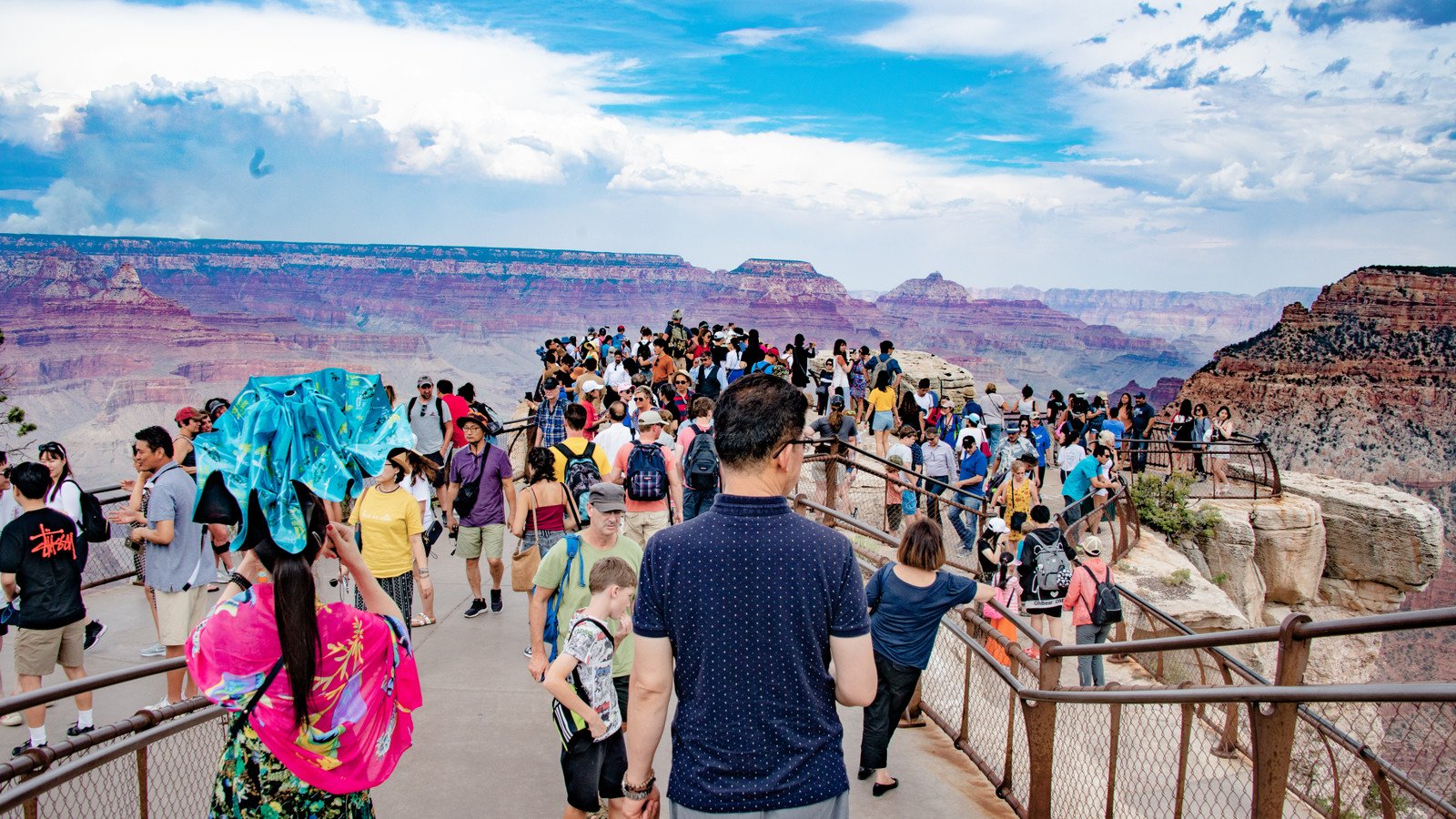
June and July have seen multiple deaths in Grand Canyon National Park, which prompted the National Park Service (NPS) to issue safety warnings to visitors. In particular, the NPS released clothing warnings after four Grand Canyon tourist deaths occurred in three separate incidents.
With scorching temperatures forecast from Thursday, 30 July through to Sunday, August 2, at Grand Canyon National Park, the NPS has renewed its visitor warning, not only regarding appropriate attire, but also specific timeframes to avoid being out and about this upcoming weekend.
Grand Canyon National Park’s 6-Hour Window Warning This Week
Grand Canyon National Park’s official Instagram account posted a notice to visitors intending to visit between Thursday and Sunday. “We are looking at extremely high temperatures at Grand Canyon from Thursday through the weekend,” the park’s post reads.
The National Weather Service (NWS) issued an Extreme Heat Warning for the Grand Canyon area; the canyon rim is experiencing temperatures of nearly 100°F/38°C, the park said. “Visitors can expect Inner Canyon temperatures to soar well above that,” it added.
The NWS’s Extreme Heat Warning is currently scheduled to end at 8 PM local time (10 PM EST).
The warning also specified that visitors should avoid the canyon during a six-hour timeframe each day, between Thursday and Sunday.
“Be smart; hike early in the morning, or in the later evening hours. Completely avoid hiking between the hours of 10 a.m.-4 p.m.,” Grand Canyon officials wrote on Instagram.
Naturally, given that many travelers keep making the same heat-related mistakes when visiting the Grand Canyon (as well as other Arizona parks), park officials included the usual heat safety advice for visitors, including:
- Drinking plenty of water
- Replacing salts with low-sodium snacks
- Wearing sun protection
- Planning for shorter outdoor activities
- Carrying a flashlight/headlamp (in case hikers need to wait out the heat and resume their hike later)
- Getting clothes wet to cool down
Visitors are advised to follow park officials’ safety advice to the letter, as the NWS’s forecast for the Grand Canyon shows unrelenting sunny and hot conditions, and high temperatures continuing through Sunday night.
NWS Forecast For Grand Canyon National Park: Friday To Sunday
|
Period |
Sky Conditions |
Temperature |
Wind |
|---|---|---|---|
|
Friday Daytime |
Sunny and hot |
High near 113°F |
Calm, becoming west 5–7 mph in the afternoon |
|
Friday Night |
Clear |
Low around 78°F |
West 3–7 mph |
|
Saturday Daytime |
Sunny and hot |
High near 115°F |
Calm, becoming west 5–9 mph in the morning |
|
Saturday Night |
Mostly clear |
Low around 78°F |
West 3–6 mph |
|
Sunday Daytime |
Sunny and hot |
High near 115°F |
Southwest 5–11 mph, gusts up to 22 mph |
|
Sunday Night |
Mostly clear |
Low around 78°F |
West 6–9 mph, gusts up to 17 mph |
The NWS also anticipates heat on Monday, with sunny and hot conditions and a high near 114°F. Gradually cooling temperatures with chances of showers are predicted from Wednesday onward.
As the heat continues, tourists heading to Grand Canyon National Park and the surrounding areas should adhere to the NPS’s safety recommendations, or risk becoming another statistic in the climbing number of national park heat deaths in recent weeks.
Grand Canyon National Park Heat Death Spike
Grand Canyon National Park has seen multiple visitor deaths due to heat since summer began, with a notable spike in June.
On June 3, an 18-year-old hiker died on the Grand Canyon’s South Rim after exhibiting heat-related symptoms on the Bright Angel Trail. A 72-year-old man died on June 12 on the South Kaibab Trail, which is located in the Inner Canyon. Park officials said at the time that temperatures in this part of the canyon can exceed 109ºF (43°C) in the shade during the midday hours.
Yet another incident followed two weeks later; a 67-year-old man and a 68-year-old woman lost their lives on June 16. They had been hiking on the North Kaibab Trail, again in the Inner Canyon. The tragedy took the death toll that week to three.
“Despite rapid response and aerial support, all three individuals were found deceased when responders arrived,” the park’s statement said, referring to both incidents. “In both cases, the deceased hikers were hiking trails in the Inner Canyon, where temperatures can exceed 109F in the shade during midday hours,” it wrote on X.
After the four deaths in three separate incidents, park officials warned tourists that “conditions can quickly overwhelm hikers during the hottest parts of the day,” especially in the Inner Canyon. “Hiking in Grand Canyon can be a challenge for anyone, especially during the heat of summer,” the park service affirmed.
The surge in heat deaths also prompted the Grand Canyon Conservancy to echo the NPS’s safety reminder
“All visitors to the Grand Canyon should ensure they are drinking plenty of fluids, resting in shade during the heat of the day, and dressing appropriately for the weather, which includes loose-fitting cotton clothing,” reads the Grand Canyon Conservancy’s dress code warning.
While not all down to heat, the Grand Canyon is one of the U.S. national parks with the most visitor deaths. In fact, it ranks second of all NPS sites in terms of fatalities, according to a report by MyBaggage, which analyzed NPS data.
National Park Visitor Deaths: Grand Canyon vs. Others
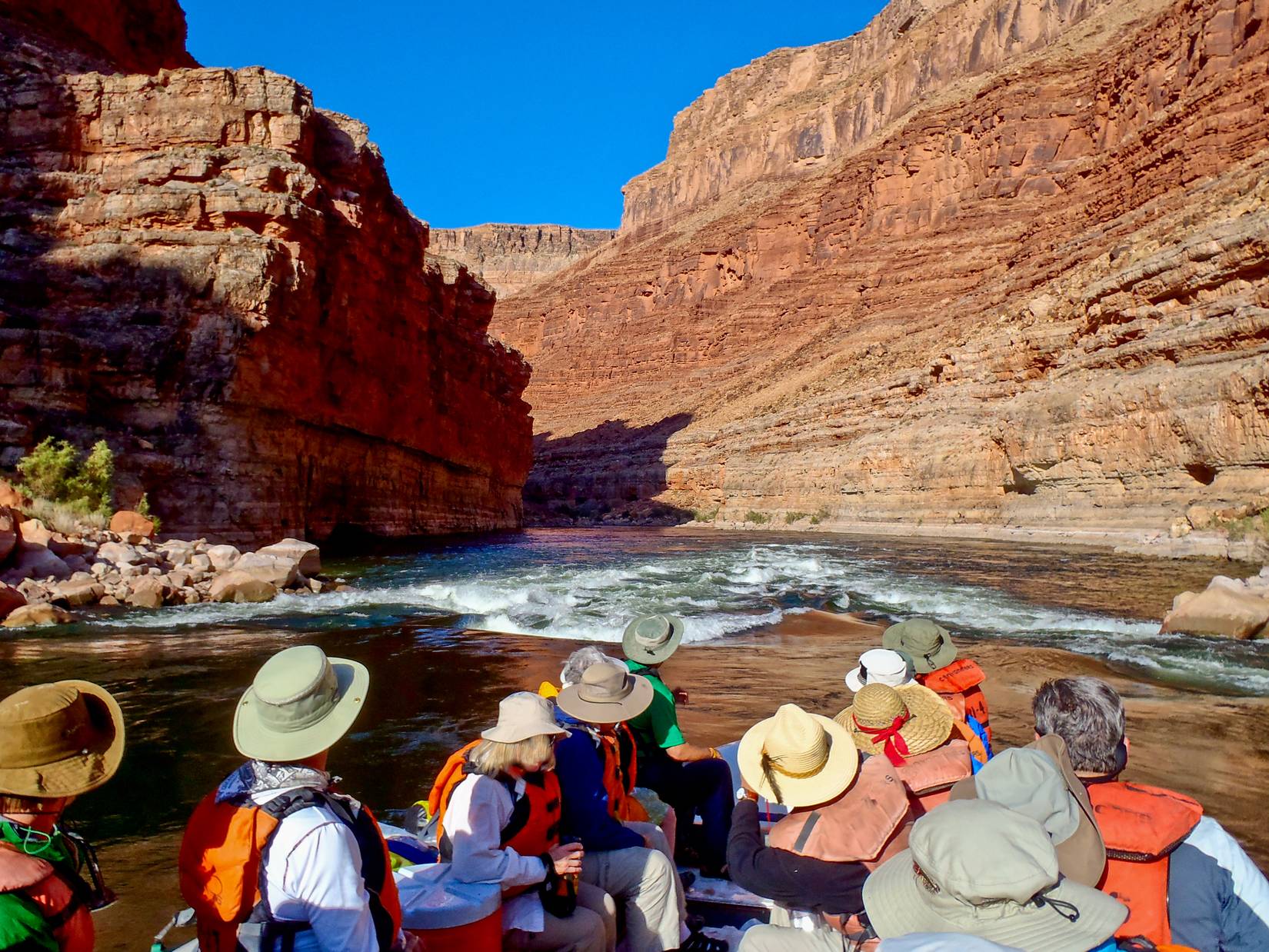
Approximately 900 people have passed away in the Grand Canyon since the 1800s (that’s more than two and a half times that of Mount Everest).
The Grand Canyon’s tally of deaths is higher than many parks (an average of 12.7 per year, with most deaths due to falling). Though, for comparison, the NPS site with the highest death toll of all is Lake Mead National Recreational Area. A total of 317 people died there between 2007 and 2024 alone (most by drowning). On average, that’s 20.88 deaths each year.
|
Rank |
National Park |
Location |
Number of Deaths (Yearly Average) |
Common Cause of Death |
|
1 |
Lake Mead National Recreation Area |
Arizona, Nevada |
20.88 |
Drowning |
|
2 |
Grand Canyon National Park |
Arizona |
12.7 |
Fall |
|
3 |
Yosemite National Park |
California |
11.11 |
Fall |
|
4 |
Blue Ridge Parkway |
Virginia, North Carolina |
10.7 |
Motor Vehicle Crash |
|
5 |
Natchez Trace Parkway |
Alabama, Mississippi, Tennessee |
10.11 |
Motor Vehicle Crash |
|
6 |
Golden Gate National Recreation Area |
California |
9.52 |
Undetermined |
|
7 |
Great Smoky Mountains National Park |
Tennessee, North Carolina |
8.82 |
Motor Vehicle Crash |
|
8 |
Glen Canyon National Recreation Area |
Utah, Arizona |
8.17 |
Drowning |
|
9 |
Sequoia and Kings Canyon National Parks |
California |
5.41 |
Fall |
|
10 |
Yellowstone National Park |
Wyoming, Montana, Idaho |
4.94 |
Motor Vehicle Crash |
Still, park fatalities in the entire park system remain relatively low in comparison to the number of visits. Between 2020 and 2024, U.S. national park sites saw an average of 290 deaths annually between 2020 and 2024. Fewer than 200 deaths were recorded at NPS sites in 2025, according to the National Parks Traveler. That figure amounts to around 0.00006% of all park visitors.
Approximately three out of four of those deaths happened during the summer, between May and September. July had the highest number of deaths; more than 21% of all 2025 fatalities. 84% were men.