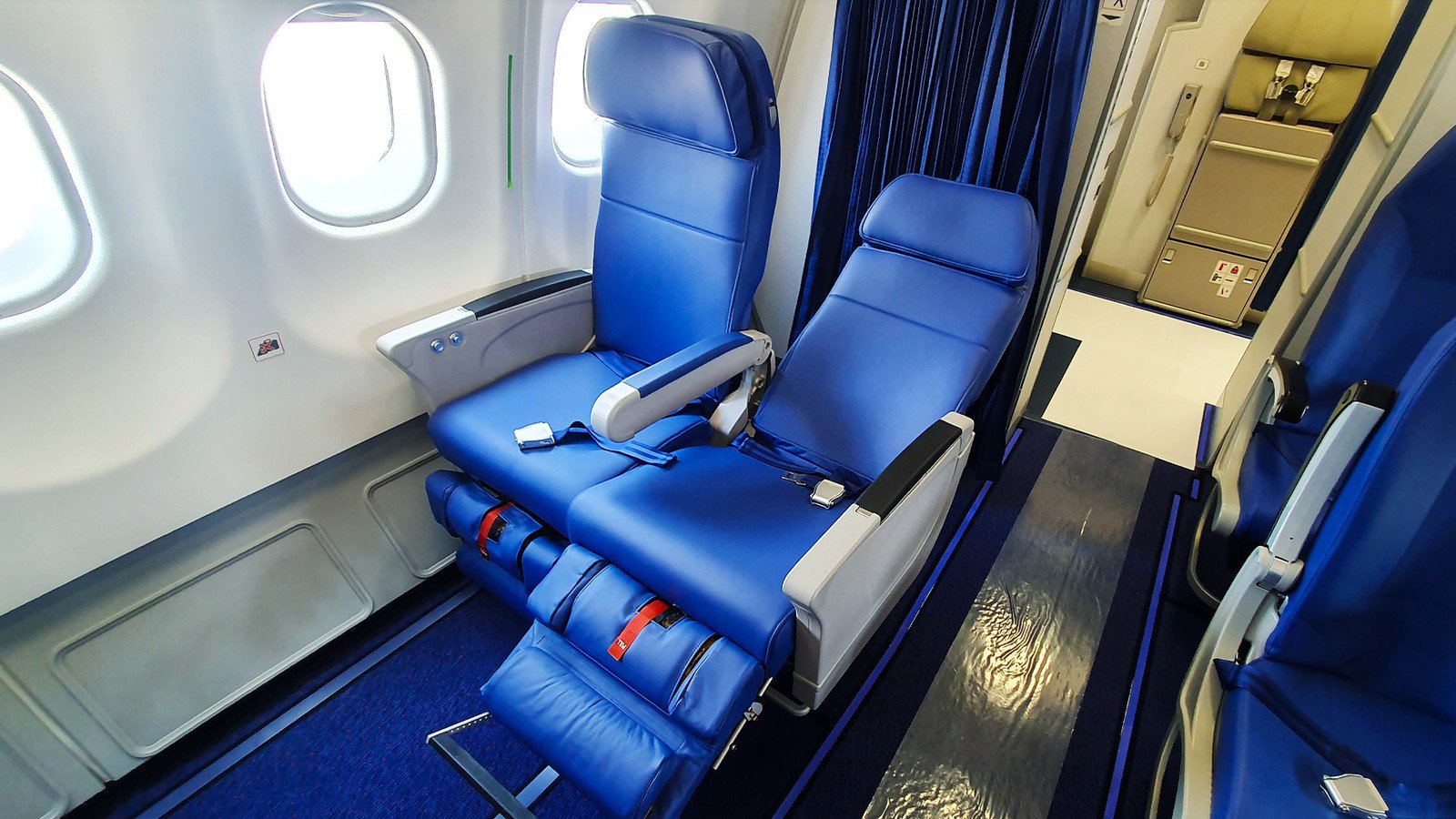
You’ve finally settled into your economy seat after a stressful morning. Your laptop is open, your coffee is on the tray table, and you have a long list of work to finish before landing. Then, without warning, the seat in front of you suddenly reclines. Your screen jerks toward your face, your knees are pinned tighter than before, and your tiny slice of personal space instantly disappears.
Technically, the passenger in front of you didn’t break any rules. Airlines designed the seat to recline. Yet few in-flight actions spark more frustration, heated debates, or viral social media posts. It’s just one of many airline behavior controversies, joining debates over window shade etiquette and carry-on bag etiquette. As economy cabins have become increasingly cramped, a feature meant to improve comfort has instead become one of air travel’s biggest sources of conflict.
The debate isn’t really about the recline button. It’s about the shrinking amount of personal space passengers have to share, making every inch in today’s economy cabin feel more valuable than ever. Here’s why those few inches of movement can feel like such a big deal.
The Shrinking Cabin Has Changed The Rules
For decades, airline seats have gradually become tighter, especially in economy. One of the biggest measurements in this debate is seat pitch, which measures the distance from one point on a seat to the same point on the seat directly in front of it. While many aircraft once offered around 34 to 35 inches of pitch, today’s economy cabins often range from 30 to 32 inches, with some ultra-low-cost airlines squeezing passengers into as little as 28 inches.
Those few missing inches don’t sound dramatic on paper. In practice, they completely change how passengers experience a flight. Every inch reclaimed by the person in front comes directly from the space available to the passenger behind.
It’s More Than Leaning Back

Many people imagine reclining as simply tilting backward. In reality, the seat moves directly into someone else’s workspace. A tray table suddenly sits closer to the passenger’s chest. Laptop screens can become trapped between the tray and the reclining seat. Tall travelers may find their knees pressed painfully into the seatback.
The Cost Of Reclining
|
Carrier Type |
Average Seat Pitch |
Inches Lost To Recline |
Approximate Remaining Space |
Knee-Zone Verdict |
|
Legacy carriers (Delta, United, American) |
30–32 inches |
2–3 inches |
About 28 inches |
Tight but manageable if reclined gently |
|
Low-cost carriers (JetBlue, Southwest) |
31–32 inches |
About 2 inches |
About 29–30 inches |
Slightly more forgiving |
|
Ultra-low-cost (Spirit, Frontier) |
28 inches |
None (many seats don’t recline) |
28 inches |
No recline conflicts, but minimal space |
|
International long-haul |
31–33 inches |
3–5 inches |
About 27–28 inches |
Highest risk for laptop and tray table conflicts |
There have been reports of laptop screens cracking when seats recline suddenly while the computer is open on the tray table. Although airlines allow reclining, the design of modern economy cabins means one person’s added comfort often comes at someone else’s expense.
Why Reclining Feels So Personal

Flying already tests people’s patience. Travelers navigate security lines, delayed flights, crowded gates, and limited privacy before they even board. Once seated, the small area around them becomes the only space they truly control.
When that space suddenly shrinks without warning, the reaction often feels emotional rather than logical. That’s why many travelers describe an unexpected recline as an “unprovoked attack.” It’s less about losing two inches and more about losing control over the last bit of personal space they have.
The disagreement usually comes down to two compelling viewpoints. One side argues that reclining is a feature included with the ticket, making it perfectly acceptable to use. The other believes that exercising that right creates unnecessary discomfort for someone else. Neither side is entirely wrong, which explains why the debate never seems to disappear.
Industry Perspective
While the debate largely centers on passenger comfort and etiquette, a spokesperson for Airlines for America (A4A), the trade association representing major U.S. airlines, told TheTravel that safety remains the industry’s primary focus.
“Safety is, and always will be our top priority, and we support the federal government’s determination regarding what seat size is safe,” an A4A spokesperson said in a statement to TheTravel. “The Federal Aviation Administration has affirmed that all U.S. carriers meet or exceed federal safety standards regarding seat size, and the FAA continues to approve seat configurations before they go into service.”
Frequent Flyer Perspectives
The etiquette debate also resonated with several frequent flyers and travel writers from TheTravel and beyond, each of whom shared a slightly different perspective on when, or whether, it’s appropriate to recline.
Ian Braganza, Portfolio Manager at TheTravel said, “I usually recline my seat just a little, in order not to disturb the passenger behind me too much. I think reclining is perfectly acceptable, but that doesn’t mean I like it when the person in front of me reclines all the way.“
Victor Jamet-Iarsen, Brand Operator at TheTravel, said:
“I usually don’t recline my seat on planes because I feel bad. I’ve been on the other side, where the person in front of me reclines too far back and the small amount of legroom I had disappears. My personal rule is don’t do to others what you wouldn’t want done to yourself. Reclining is acceptable in certain situations when the extra space is needed, but I am not a fan of being “that guy” on a flight!”
Rebecca Crowe, a travel writer at TheTravel, explained: “I don’t usually recline my seat. I have the luxury of being short, and I’m not a fan of when people do it to me, especially during meal times. It pushes the tray table right into you and makes it harder to get out of your seat.”
She went on to say, “My main rule is the domino effect. If everyone is reclining, you can recline. If there’s no one behind you, go ahead. If the person behind you is a child, go ahead. But if someone who’s 6-foot-2 is already cramped, wait until they recline first, or simply ask. It’s all about using common sense and empathy. In my book, you should always revert back to upright for meals and drinks service.”
Traveler Perspective Online
The discussion extends well beyond travel writers. In one Reddit thread on r/NoStupidQuestions, travelers shared a wide range of opinions about reclining, with many agreeing that the circumstances matter just as much as the recline itself. One commenter wrote:
“If it’s an overnight flight I will recline my seat during normal sleeping hours when the people in the plane quiet down.”
Another commented: “I try not to recline but if someone reclines too far back then I have to recline as I start to [feel] claustrophobic… ultimately it is the airlines fault for squeezing so many seats in and not limiting reclining option.”
Instead of direct confrontations, passengers often respond with passive-aggressive behavior. Some intentionally bump the seatback with their knees. Others repeatedly adjust the tray table, point the overhead air vent toward the reclined passenger, or sigh loudly enough for everyone nearby to hear. Small disagreements can quickly create tension that lasts the rest of the flight.
Good Etiquette Can Keep Everyone Comfortable

Fortunately, reclining doesn’t have to create conflict. Most frequent flyers agree that a little awareness goes a long way.
Look Behind You Before Reclining Your Seat
Before pressing the recline button, take a quick glance behind you. Is the passenger using a laptop? Are they eating? Is there a hot drink sitting on the table? Waiting even a minute or reclining slowly gives the person behind you time to adjust.
You Don’t Always Need The Full Recline
Many travelers find that a partial recline provides noticeable back support without dramatically reducing someone else’s space. Just because the seat reclines completely doesn’t mean every inch has to be used.

During Meal Service, Sit Upright Perhaps the closest thing to an unwritten rule is returning your seat to the upright position when meal service begins. Eating in economy is difficult enough without having the tray table pressed against your chest.
Simple Habits That Can Make A Noticeable Difference
- Recline slowly instead of suddenly.
- Check behind you before leaning back.
- Return your seat upright during meal service.
- Avoid reclining if the passenger behind is actively working on a laptop.
- Consider a partial recline rather than the maximum angle.
- If someone politely asks for a little extra room, be willing to compromise when possible.
Airplane seats are designed to recline, and passengers are generally entitled to use that feature. But shrinking seat pitch has transformed what used to be a simple comfort adjustment into one of the most divisive etiquette questions in modern travel. In today’s economy cabins, every inch matters.
Whether you choose to recline or prefer to stay upright, a little situational awareness can prevent unnecessary frustration. Looking behind you, reclining gradually, and being mindful during meals won’t solve the industry’s space problem, but those small gestures can make sharing a cramped cabin a little more bearable.