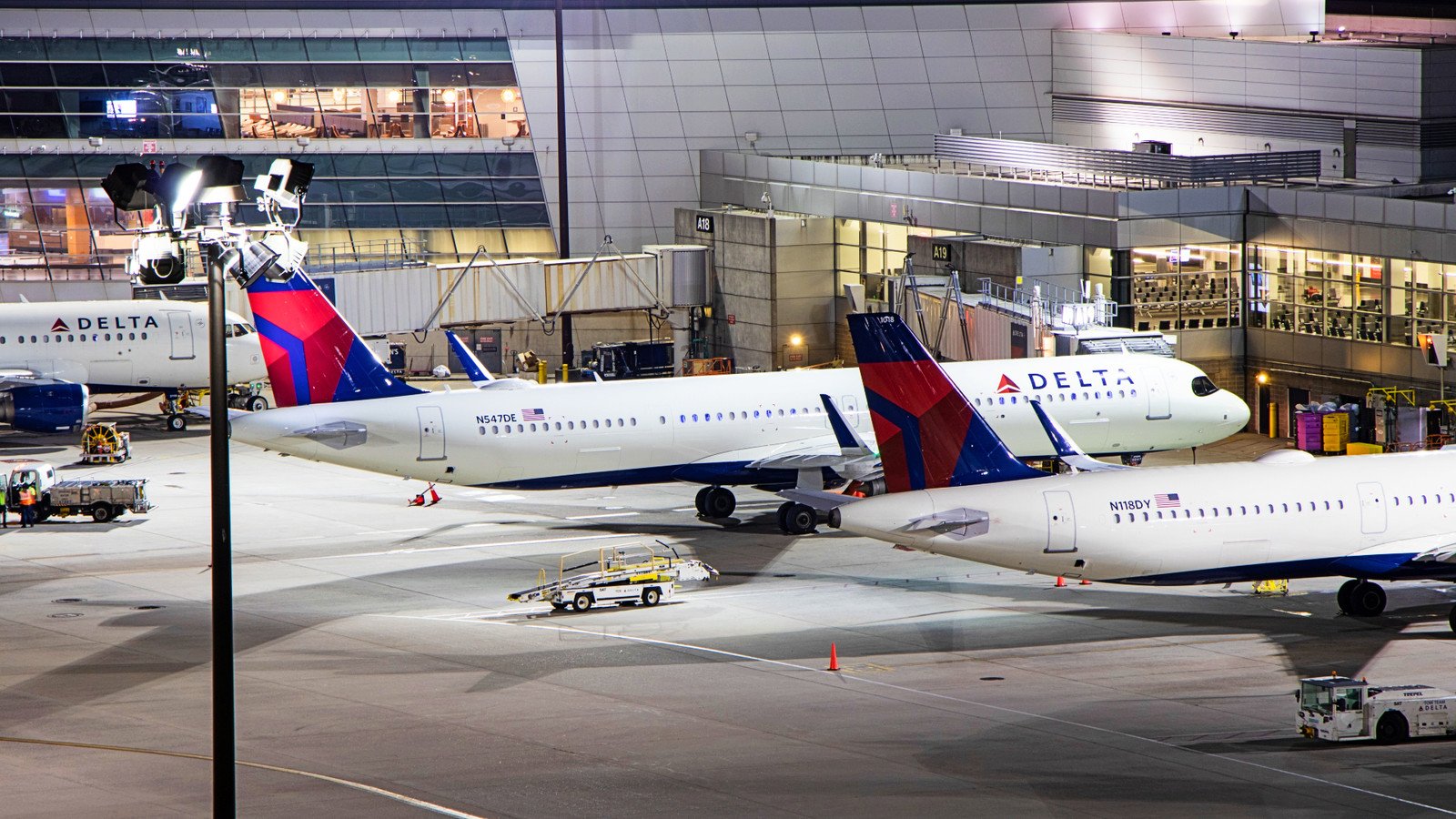
At Boston Logan International Airport, a close call between two passenger jets is under investigation by the National Transportation Safety Board (NTSB). Involving an arriving Delta Air Lines and an American Airlines aircraft, the incident is shedding more light on what happened and how these two flights found themselves within hundreds of feet of one another and nearly collided.
Located in Massachusetts, Boston Logan Airport is one of the busiest in the U.S., serving as a major transportation hub for the East Coast and millions of travelers each year. The airport covers more than 2,300 acres and includes four passenger terminals and six runways, including the intersecting airstrip involved in the recent occurrence. The aircraft themselves were operated by American Airlines and Delta Air Lines, two of the largest and most reputable U.S. carriers. The NTSB is now investigating what led to the runway incursion and how the event unfolded.
A Close Call Put Delta And American Airlines On A Collision Course
According to the NTSB’s initial report, the situation occurred around 11:34 a.m. EDT on June 20, 2026, as Delta Air Lines Flight 2351 approached Boston Logan International Airport, while American Airlines Flight 3161 prepared for its departure. Delta’s Airbus A319 was arriving from Dallas/Fort Worth International Airport, while American’s Boeing 737-800 was scheduled to fly from Boston to Charlotte-Douglas International Airport.
The two flights were along intersecting airstrips, with Delta approaching Runway 33L for landing and American situated on Runway 27 as it prepared for takeoff. However, before the near-collision, air traffic controllers instructed the American crew to “line up and wait” on Runway 27 while letting them know that traffic was landing on 33L. It didn’t take long before Delta had been cleared to land by controllers, with them noting that traffic had been holding on the nearby runway.
The sequence of events leading up to the runway conflict unfolded as follows:
|
Time (EDT) |
Event |
|
11:32:21 a.m. |
Air traffic control instructed American Airlines Flight 3161 to “line up and wait” on Runway 27 while Delta traffic was landing on Runway 33L. |
|
11:32:35 a.m. |
Delta Air Lines Flight 2351 received landing clearance for Runway 33L. |
|
11:33:43 a.m. |
American Airlines Flight 3161 received takeoff clearance from air traffic control. |
|
11:33:46 a.m. |
The American crew acknowledged the takeoff clearance. |
|
11:34:06 a.m. |
American Flight 3161 briefly began increasing speed before stopping. |
|
11:34:37 a.m. |
American Flight 3161 began its takeoff roll. |
|
11:34:45 a.m. |
Delta Flight 2351 began communicating with air traffic control that it was initiating a go-around due to the American aircraft. |
|
11:35:05 a.m. |
Air traffic control provided go-around instructions to Delta Flight 2351. |
As Delta approached the intersection, the flight crew noticed American Airlines Flight 3161 had begun moving down Runway 27 and decided to abort the landing. The Delta crew performed a go-around, allowing the passenger jet to move away from the runway before landing safely at Boston Logan. Meanwhile, the American Airlines plane continued takeoff and eventually landed in Charlotte without further incident.
The NTSB’s early evaluation discovered that the two planes came within approximately 670 feet of each other at their closest point. No injuries were reported among the 136 people on board the Delta flight or the 182 people aboard the American Airlines passenger jet. While neither aircraft had been damaged, the potentially dangerous situation warranted further analysis into the factors that created the near-collision and how a routine takeoff and landing operation had turned into such a close call.
A Delayed Takeoff At Boston Logan International Airport Raises Questions For Investigators
The near-miss involved multiple factors, but the NTSB’s reports so far have not put particular attention on the moments after American Airlines Flight 3161 received its clearance from controllers. The NTSB reports the American crew acknowledged the clearance, but the aircraft did not begin its takeoff roll immediately. The delay became a point of scrutiny for the review as Delta Flight 2351 continued approaching the intersecting runway.
The American Airlines crew told investigators that the delay was caused by an unexpected takeoff configuration warning after the first officer started the engines for departure. After the warning, the crew reduced power and looked over several settings on the aircraft, including flaps, trim, and speedbrake, before concluding that the warning was likely a mistake. After finishing the checks, the American Airlines flight began moving down the runway.
“When approaching the intersection of runways 27 and 33L, the captain stated he saw DAL2351 initiating a go-around,”
The NTSB preliminary report states.
Aviation experts noted that the delay between receiving authorization and the beginning of the takeoff roll was significant because runway conditions have been known to change quickly. While pilots may receive a go-ahead, they’re still responsible for confirming that the situation is safe before taking off. Currently, investigators are examining whether additional communication with air traffic control should have occurred before Flight 3161 started down the runway.
The NTSB has not issued a final determination on what resulted in the June 20 incident, and the probe remains ongoing. However, the situation highlights how something as seemingly insignificant as a few small delays and decisions from the pilots can ripple out and become critical when multiple aircraft are operating on nearby runways, and how important the systems designed to prevent these situations from escalating can be.
The Safety Lessons From The Boston Logan Runway Incursion
Credit: Shutterstock
While the runway incident at Boston Logan International Airport ended without injuries or damage to either plane, the situation reflects why airports rely on multiple safety systems to monitor potential conflicts between their vehicles. According to the NTSB’s report, both Boston Logan and the airlines involved were equipped with technology designed to provide warnings when potentially dangerous situations occur.
Boston Logan uses Airport Surface Detection Equipment – Model X (ASDE-X), a system that provides air traffic controllers with audio and visual alerts when it recognizes potential conflicts along the runway. The airport also utilizes Runway Status Lights (RWSL), which automatically illuminate to warn pilots when an airstrip might not be safe for departure.
As the inquiry continues, examiners will examine how these technologies performed and how they interacted with the decisions made by pilots and controllers alike. Although the existing systems assist in identifying potential safety hazards, scenarios like the June 20 incident provide valuable information that can be used to improve aviation safety and prevent similar situations in the future.
Almost a month later, the NTSB continues to dissect the situation by reviewing the data collected. While the preliminary report has provided new details about the moments leading up to the runway incursion, investigators have not issued a final determination on the cause of the occurrence. The report does highlight the actions of the American Airlines crew, including the delay after receiving takeoff clearance, as a key area of focus in the ongoing examination.