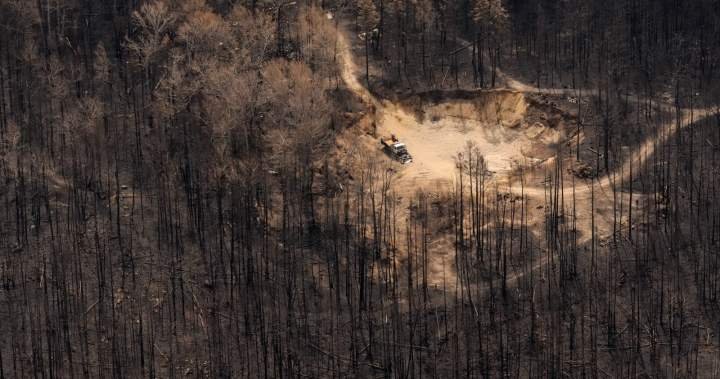
The Ontario government says the wildfire situation is currently moving in a “reassuring direction” with 80 fires extinguished in the past two weeks.
According to the province, 159 fires are still raging across northern Ontario, with 30 burning out of control. Officials said that cooler temperatures and precipitation have helped, but that could soon change.
Fourteen communities have been evacuated across northern Ontario, according to Minister of Emergency Preparedness and Response Jill Dunlop. So far, five of these communities have been able to return home.
She said approximately 2,000 people remain evacuated and are taking refuge in host communities across the province.
While the Ontario government acknowledged its wildfire response could have gone better, it has resisted calls for a public inquiry.
“There’s always things that we can do better and … we’re going to talk to communities,” Mike Harris, Ontario minister of Natural Resources, said Thursday.
First Nations leaders have called for a public inquiry into the Ontario government’s wildfire response, saying some communities were essentially left to fend for themselves and alleging the government didn’t offer timely assistance. Last week, Premier Doug Ford disagreed with the suggestion the province could have done more to prepare.

Get breaking National news
Get breaking Canada news delivered to your inbox as it happens so you won’t miss a trending story.
“I totally disagree with that,” Ford said when asked about allegations from First Nations communities. He said Ontario has helped move roughly 2,000 people from affected First Nations communities and has provided hotel accommodations, food and other assistance.
When asked by reporters if he could commit to a public inquiry, Harris said the government is currently focused on suppression efforts.
“Right now we’re very focused on direct suppression efforts and making sure that people and property are safe here in the province,” he said. “Once we get through the fire season, just like we do after every fire season, we go through what’s happened well, what hasn’t worked the best with our teams and we look to change those things for the following season.”
Personnel and aircraft from Alberta, Newfoundland, New Brunswick, Yukon and P.E.I., as well as federal crews, have helped with suppression efforts. Crews from Mexico have also been deployed.
While some cooler temperatures and rain have aided crews in their efforts, Minister of Indigenous Affairs Greg Rickford said they are not yet out of the woods.
“I’m sitting here in Kenora right now. We don’t have any smoke but by this afternoon a southeast wind could easily move into our community on a dime and put us under certain kinds of pressures,” he said.
A heat warning and severe thunderstorm warning are in place for large parts of northwestern Ontario. Areas northwest of Thunder Bay can expect daytime highs of 28 C to 30 C, according to Environment Canada, with humidex values reaching up to 38.
© 2026 Global News, a division of Corus Entertainment Inc.