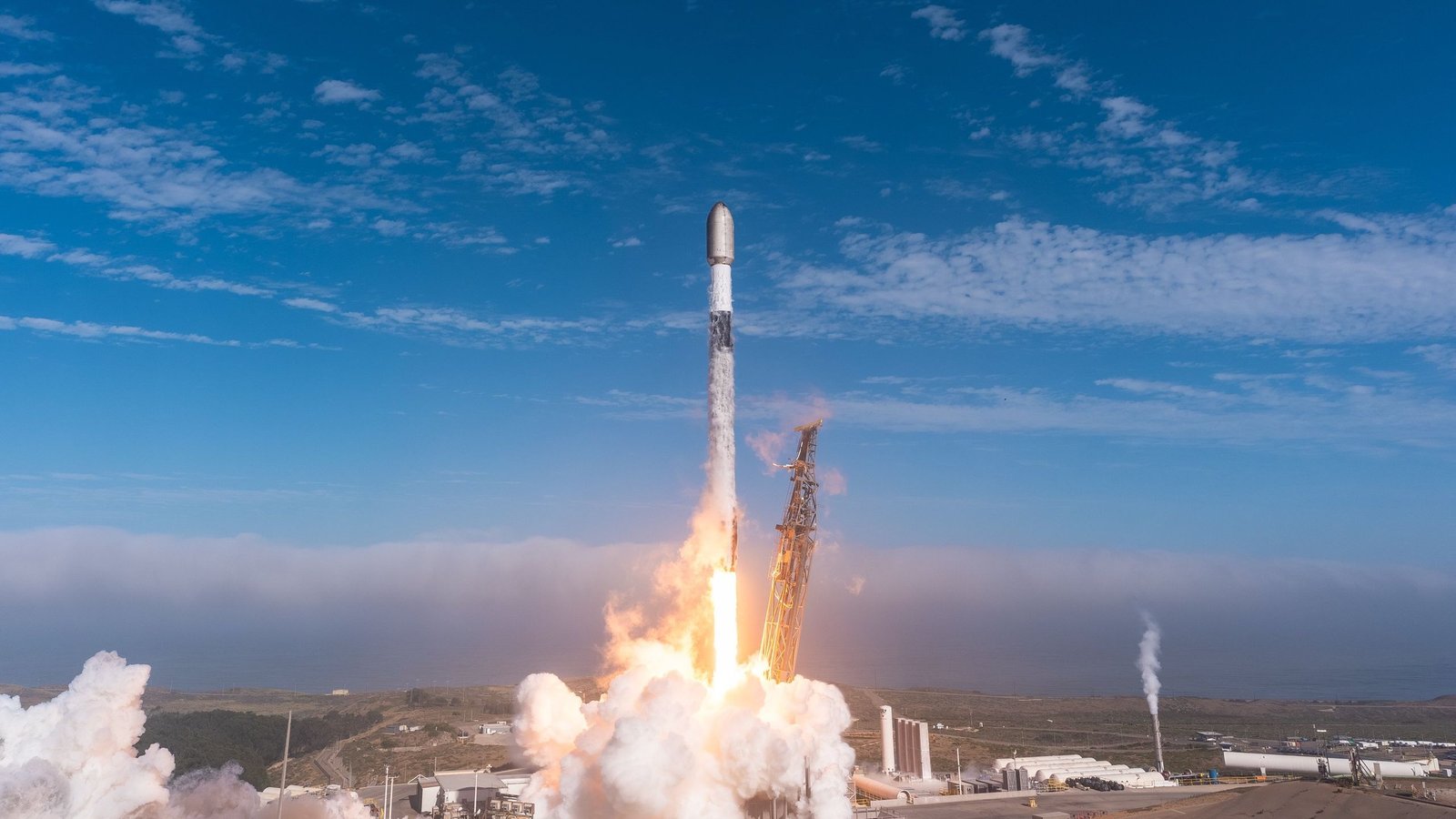
SpaceX launched 24 more satellites for its Starlink network on Saturday (July 25), a day after demonstrating it could do the same on its next-gen rocket.
A Falcon 9 rocket carrying Starlink group 17-51 lifted off at 11:51 a.m. EDT (1521 GMT or 8:51 a.m. PDT local time) on Saturday from Space Launch Complex 4 East at Vandenberg Space Force Base in California.
About an hour later, the 24 broadband internet satellites were deployed into low Earth orbit (LEO), as planned.
Previous Booster B1100 launches
NROL-105 | 6 Starlink missions
The launch marked the eighth flight of the Falcon’s 9 first stage (Booster 1100), which touched down on the “Of Course I Still Love You” droneship, stationed in the Pacific Ocean.
The successful launch raised the total number of active Starlink satellites to 10,865, according to satellite tracker Jonathan McDowell. That number had been 20 units higher for about 20 minutes on Friday, when SpaceX conducted a deployment and operations trial during the 13th test flight of its Starship launch vehicle.
The Starship test was planned to be short-lived but was successful in providing data to support NASA’s decision to fly Starlink systems on its Artemis III crewed mission to LEO, which is scheduled to fly next year.
Saturday’s launch was SpaceX’s 87th Falcon 9 mission of the year.