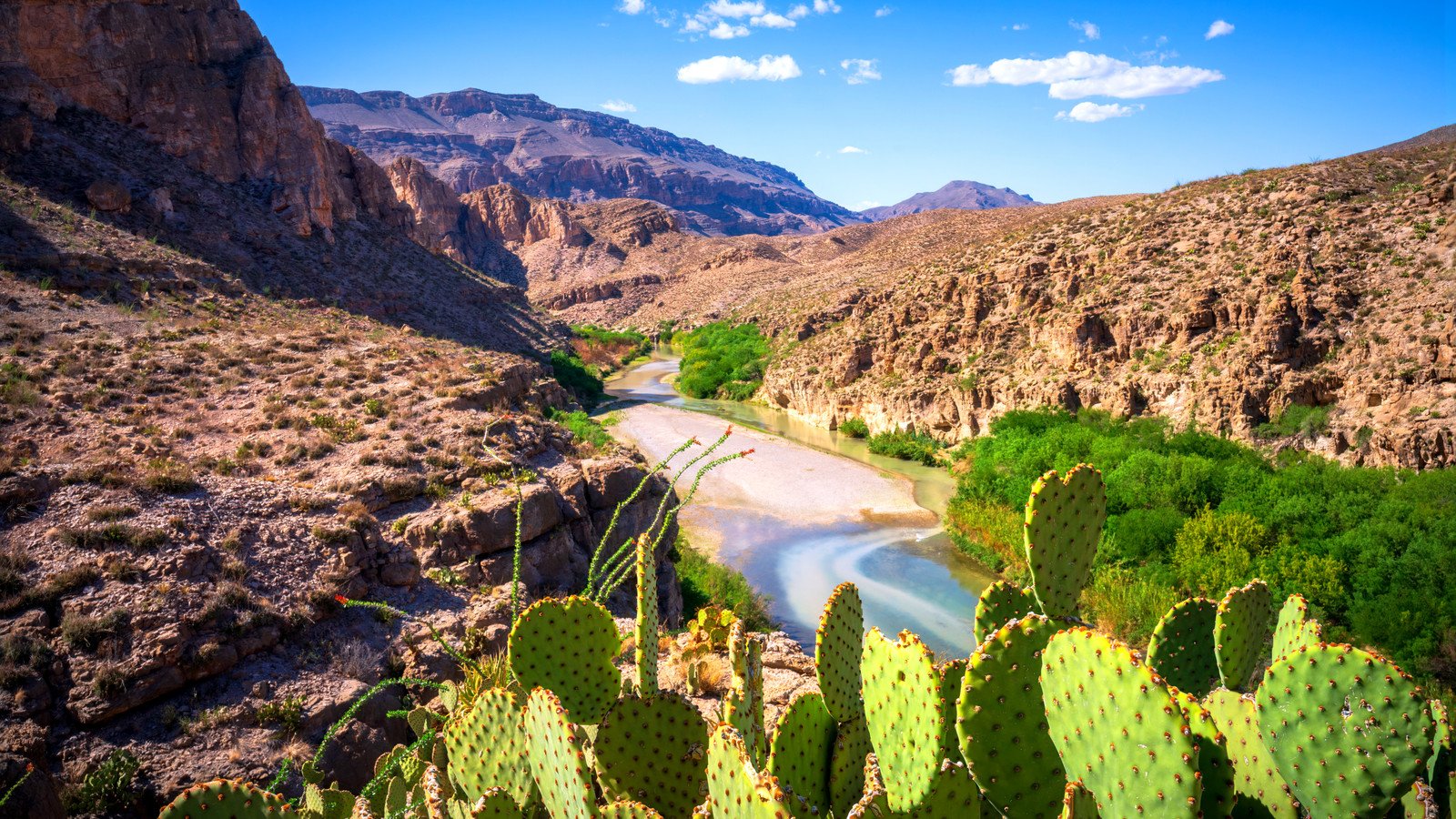
Located in Southwest Texas, Big Bend National Park is the only U.S. national park sharing a border with Mexico. In early 2026, the Trump administration announced plans to build a border wall inside this protected area, raising concerns among environmental groups and locals alike.
Over the past few months, the U.S. government has repeatedly revised plans for this project before confirming in mid-June that the initially proposed border wall would be replaced with a 17-mile metal barrier. However, it now seems the park may face further environmental damage.
Bob Krumenaker, chair of Keep Big Bend Wild and former Superintendent of Big Bend National Park, told TheTravel in an email statement that the U.S. government intends to blow up Mariscal Mountain to build a route over it. This may have drastic consequences for the local ecosystem, as blasting could damage the Rio Grande channel, violating Article IV of the 1970 Boundary Treaty with Mexico.
DHS Plan To Blow Up Mariscal Mountain Could Violate 1970 Boundary Treaty
Customs and Border Protection (CBP), the largest federal law enforcement agency within the Department of Homeland Security (DHS), has once again updated its Smart Wall map, which shows border infrastructure plans affecting Big Bend National Park. This time, the update includes a controversial proposed route that would pass over Mariscal Mountain.
The proposed route was harshly criticized by Texas Congressman Lloyd Doggett, who defined the project as an “incredible waste of both taxpayer money and an invaluable place of spectacular beauty.”
“The potential destruction from road construction over the rugged terrain of Mariscal Mountain is extreme […]. Tons of rock blasted away could end up impacting Mariscal Canyon, the Rio Grande, and Mexico,” Congressman Doggett said.
Congressman Lloyd Doggett, together with 11 other members of Congress, sent a letter to Secretary of State Marco Rubio, Homeland Security Secretary Markwayne Mullin, U.S. Customs and Border Protection Commissioner Rodney S. Scott, and W.C. “Chad” McIntosh, Commissioner of the International Boundary and Water Commission for the U.S. section, urging them to reconsider the plan.
CBP’s Plan For Big Bend National Park
|
Metal Barriers |
17 miles |
|
Surveillance infrastructure |
205 miles |
|
Budget |
$1.7 billion |
|
Company |
Southwest Valley Constructors Co. |
|
Deadline |
May 11, 2027 |
In the letter, Congressman Doggett reminded U.S. leaders that “blasting a road across the mountain could send spoil toward, and potentially into, the Rio Grande.” This could alter the river’s normal flow, thereby violating Article IV of the 1970 Boundary Treaty, which requires the International Boundary and Water Commission to review plans that could alter the river’s natural flow before construction proceeds.
Unfortunately, little is known about this project at present, as the U.S. CBP has not released details about the proposed road. The only information made public is its location and width, currently set at 24 feet. Congressman Doggett’s letter requests additional information, including spoil disposal plans, design, and engineering details. Environmental groups are now also questioning whether the project is necessary.
Environmental Groups Say New Proposed Road Has ‘No Security Purpose’
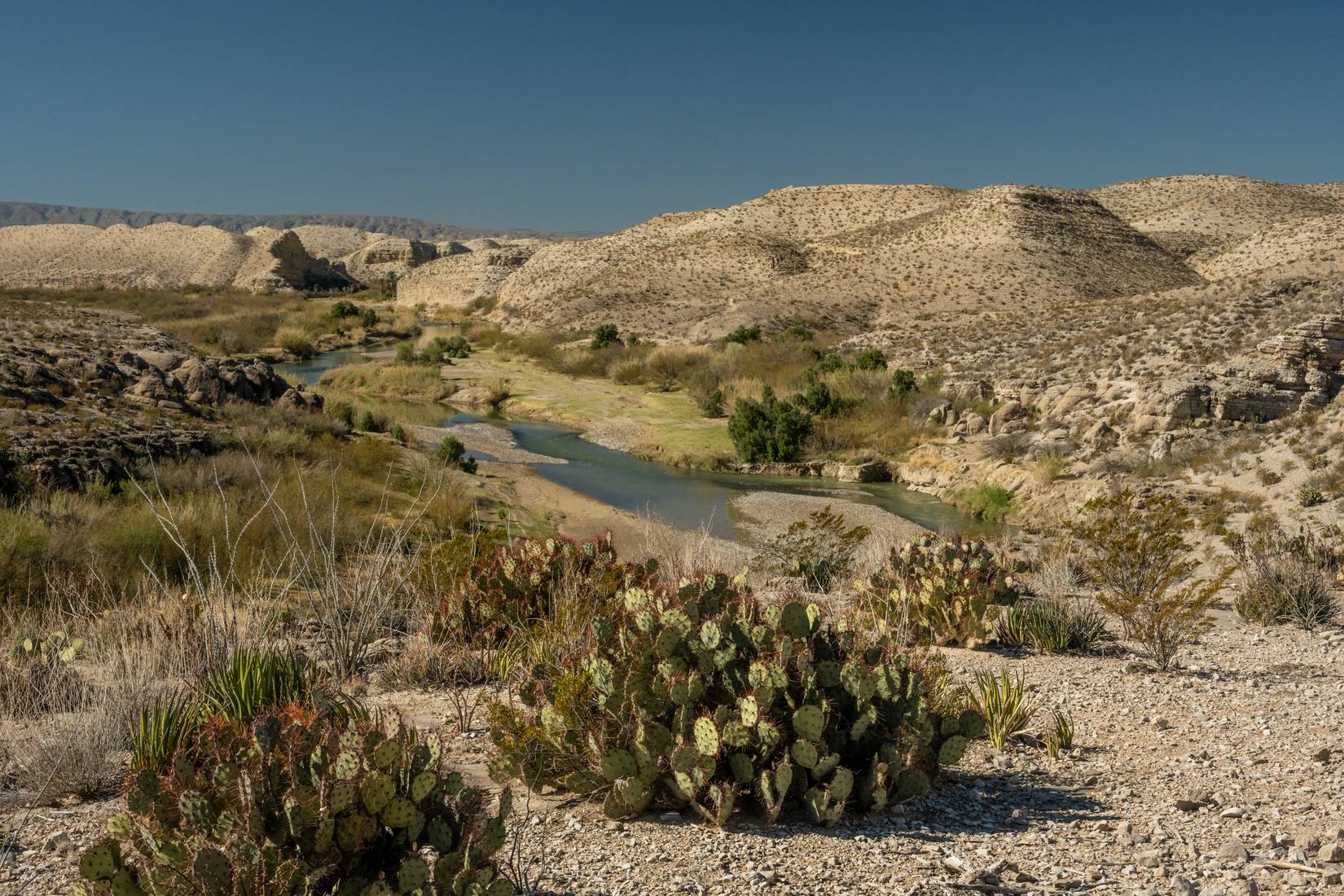
Bob Krumenaker sent an email statement to TheTravel raising concerns about whether a road over Mariscal Mountain would serve any meaningful purpose, given that this is one of the most remote areas within Big Bend National Park. Even though the CBP is now planning vehicle barriers on either side of the canyon, there is currently no Mexican road access on the south side of the river, meaning the risk of vehicles crossing there is practically zero.
“The planned patrol road over the mountain is not just highly destructive, but it serves no security purpose, as the existing unpaved NPS ‘River Road’ just north of the mountain is already patrolled regularly by the Border Patrol, and considering the terrain the new route will cross, likely faster travel from one side of the mountain to the other,” Keep Big Bend Wild told TheTravel.
He added, “Let’s not forget, illegal border crossing activity inside BBNP is less than 0.05% of that along the entire border. For this, we are spending $1.7 billion of taxpayer money and irreparably damaging one of the nation’s crown jewel national parks”
While the security purposes of this project remain unclear, its environmental impact on the local ecosystem is evident.
The Proposed Mariscal Canyon Road May Have Drastic Consequences For Texas’ Peregrine Falcon Population
Mariscal Canyon is one of the wildest areas inside Big Bend National Park and supports the highest density of nesting peregrine falcons in Texas. According to the Bird of Prey Conservancy, CBP’s current plans for this area may destroy as much as one-fifth of Texas’ statewide peregrine falcon population, as the agency intends to dynamite one of their major nesting sites in the state.
At present, this bird remains on the Texas state list of endangered species, after spending nearly two decades on the Federal list of endangered species between 1970 and 1999.
While Mariscal Canyon is only 5 miles long, it hosts up to three nesting pairs of peregrine falcons yearly, as much as a fifth of the entire statewide population, which is currently estimated at 15 pairs. This is likely the state’s most densely populated Peregrine nesting area, so blasting the mountain to build a road could have drastic consequences for these birds.
According to Keep Big Bend Wild, contractor Southwest Valley Constructors will begin clearing activity within Big Bend National Park this week to install concrete survey markers. At present, it remains unclear whether the CBP will proceed with the project or will reconsider its proposed road at Mariscal Mountain.
TheTravel reached out to CBP but did not immediately receive a response in time for publishing.
window.arrayOfEmbeds[“226f33227f131855”] = {‘facebook’ : ‘"n<div id="fb-root"></div>nn<div class="fb-post" data-href="https://www.facebook.com/lastchanceforever/posts/pfbid02vivPeu75LbjDJb573sp6qCoQWyXiYEVJZVMxBpYXmS6zy4r7TSRX7tW8sMMMAnUnl" data-width="552"></div>n"’};
window.arrayOfEmbedScripts[“facebook”] = “"<script async="1" defer="1" crossorigin="anonymous" src="https://connect.facebook.net/en_US/sdk.js#xfbml=1&version=v26.0"></script>"”;