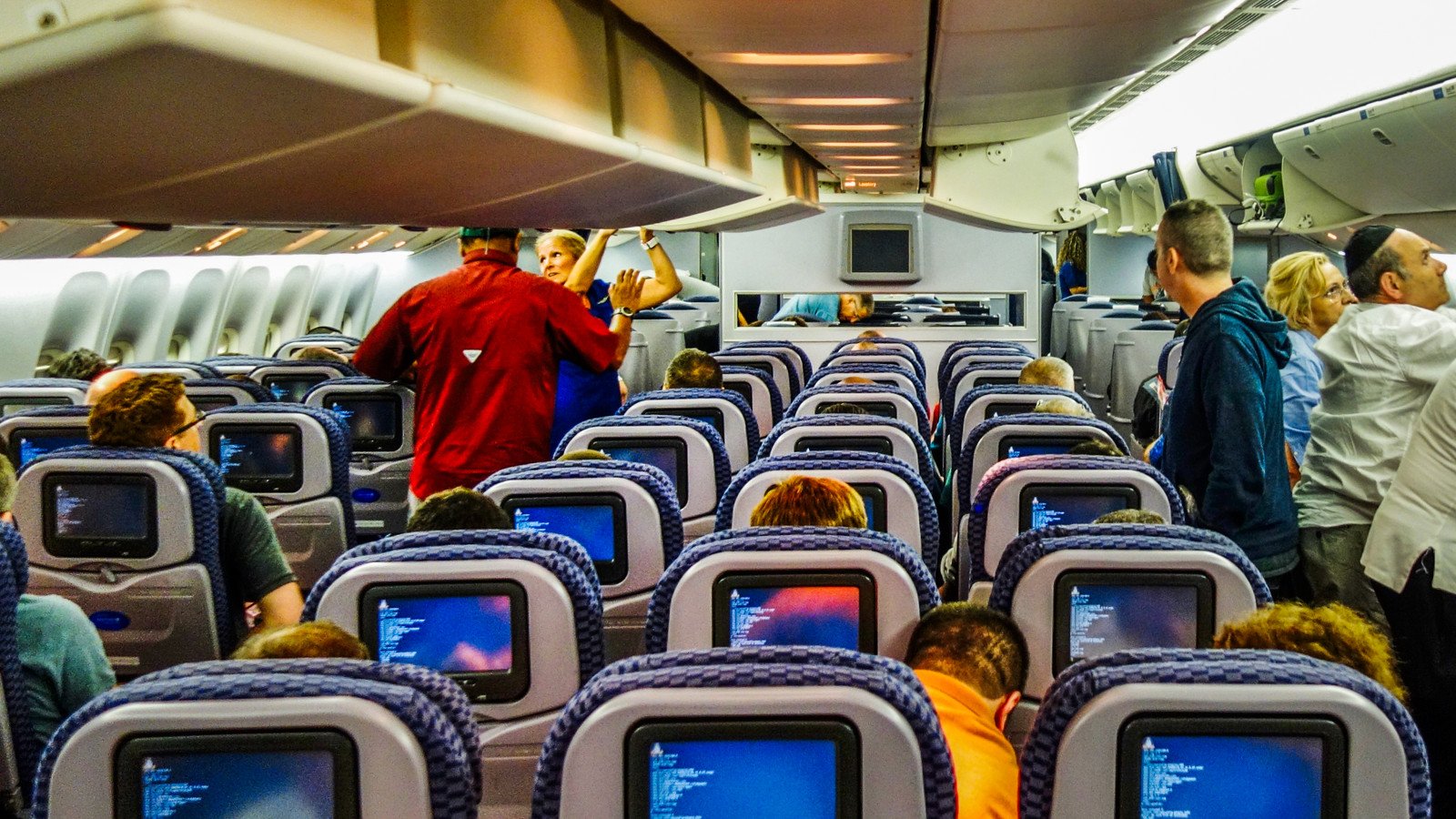
Children aren’t always going to sit quietly through a flight. Babies cry, toddlers get restless, and even the most prepared parents can find themselves dealing with a meltdown at 35,000 feet.
But one United Airlines passenger says their recent flight went well beyond the usual challenges of traveling with young children. According to their account, three toddlers spent much of the trip running through the aisle and wreaking havoc throughout the flight, with the parents barely batting an eye.
Beyond the children just generally irritating all the passengers around them, the original poster questioned the safety of their behavior and why the flight attendants and parents didn’t do more to get them under control.
United Airlines Passenger Says Toddlers Were Allowed To Run Through The Cabin
The passenger described the incident in a July 24 post titled “FREE RANGE PARENTING” on the United Airlines subreddit.
According to the poster, one family onboard consisted of two parents and three toddlers, and the flight was traveling out of Houston’s George Bush Intercontinental Airport (IAH).
“Throughout the flight, the kids ran up and down the aisle, screamed,” the passenger wrote, adding that they also watched cartoons without headphones — which is against United Airlines policy now. Meanwhile, the passenger claimed both parents were wearing headphones and watching movies throughout the ruckus.
The original Reddit poster said a headphones announcement was made at the beginning of their flight but claimed it wasn’t enforced when the children continued watching cartoons at full volume.
The flight attendants did step in during meal service. According to the passenger, a crew member asked the mother to bring the children back to their seats because the aisle needed to remain clear for the service cart. The children returned, but the passenger claimed they were back up again within a few minutes.
“During turbulence, one of the kids did not have their seats fastened and was standing up in their seat,” the original poster wrote. “I kept hoping and praying that the little kid does not get yoinked into the afterlife in case the plane hit severe turbulence. The mother simply said, ‘they are energetic, and they don’t like sitting down,’ while rolling their eyes at passengers who seemed concerned and annoyed.”
The flyer later edited the post to say, “This is not free range parenting but rather absentee parenting with unparented offspring.”
A Separate Flight Was Delayed An Hour When A Toddler Wouldn’t Sit Down
The United Airlines incident isn’t the only story to make headlines for children with unruly behavior. Another incident also showed what can happen when a young passenger will not remain seated when required.
Earlier in July, another traveler said a flight in Sweden arrived more than an hour late after a 3-year-old refused to sit in their seat before takeoff.
According to the post, the flight attendants gave the parents roughly 10 minutes to get the child seated. When they couldn’t, the family was forced to deplane, which required additional time to taxi back to the gate, and prepare the aircraft and crew for takeoff a second time.
“I would seriously pay extra to go on adult-only flights,” the original poster added.
Under United States Federal Aviation Administration regulations, passengers must occupy an approved seat with their safety belt secured during taxi, takeoff, and landing, with an exception allowing children under two to be held by an adult in their lap. The FAA still strongly recommends that even children younger than two travel in their own seat using an approved child restraint system.
The FAA also requires passengers to remain seated and buckled whenever the seatbelt sign is turned on. Unexpected turbulence is one of the reasons it recommends leaving a seatbelt fastened even when the sign is off. Only days ago, two flight attendants were injured, and an American Airlines flight was diverted due to severe turbulence.
So, a toddler crying is one thing. But a toddler standing in a seat during takeoff or refusing to sit during taxi is something the crew has more reason to address.
What Can Flight Attendants Actually Do About Disruptive Children?
Flight attendants aren’t there to discipline someone else’s children, and there’s only so much they can do about crying, whining, or restlessness.
However, they have more authority when behavior begins interfering with cabin safety, crew duties, or airline rules, according to Simple Flying.
|
Situation |
What Cabin Crew Can Do To Help |
|---|---|
|
Child is crying or having a tantrum |
Offer assistance where possible, but crying itself generally is not a safety violation |
|
Child is blocking the aisle |
Ask the parent to return the child to their seat, particularly when crews need the aisle for service or safety |
|
Seatbelt sign is illuminated |
Require passengers to sit and comply with seatbelt instructions |
|
Child will not sit for taxi, takeoff, or landing |
Crew must resolve the seating issue before the flight can safely proceed |
|
Videos or games are playing aloud |
Ask parents to ensure their children are using headphones. If on a United Airlines flight, passengers can even be removed if they refuse to comply with the headphones requirement policy. |
|
Parents refuse safety instructions |
Escalate the situation through the cabin crew, captain, and ground personnel, which can ultimately result in removal |
The FAA describes flight attendants primarily as safety professionals, not hospitality staff or onboard babysitters. In an FAA interview, flight attendant Mary Garton said her job is to keep all passengers safe and to be ready to act as everything from a firefighter to a medical responder if necessary. She also said cabin crew can assist overwhelmed parents when resources allow, including helping them understand where child restraint systems can be used.
Still, some passengers in the Reddit thread felt the flight crew in this particular situation should have done more to address the children’s problematic behavior, especially considering they were blatantly ignoring established United Airlines Contract of Carriage policies.
- “I’ve been on several flights now where the flight attendants have announced that the airline policy is that all passengers must use headphones in order to privately listen to anything with sound, so as not to disturb other passengers. They’ve even emphasized the ‘including children’ part. Your flight attendants definitely failed you in that respect, as well as with enforcing seatbelt safety.”
- “I’ve seen this multiple times especially toddlers standing in seats when seat belt signs are illuminated. Of course it’s the parents fault but FAs job is to enforce rules. I would definitely be sending a complaint.”
- “Where staff is not enforcing policies, I think this is definitely an issue to take up with the airlines.”
- “I’d also let the airline know because the FAs were not doing their job. Those kids not only put themselves in danger but other people. Making an announcement to the whole plane about getting in your seat is not the same as confronting the people causing the issue.”
Passengers shouldn’t have to get involved
The Reddit discussion included plenty of suggestions for confronting or publicly shaming the parents and even the children themselves, but getting into an argument with another passenger can create a second problem for the crew to handle.
A better first move is to speak quietly with a flight attendant. Be specific about what is happening rather than simply saying a child is annoying. A child repeatedly entering the aisle during service, playing loud audio with no headphones, kicking your seat, or remaining unbuckled during turbulence gives the crew something concrete to address.
If the cabin isn’t full, it may also be worth asking to be reseated away from the child if possible. Noise-canceling headphones or earplugs are valuable backup options even when another passenger is technically breaking the airline’s rule.
Passengers can also contact the airline after landing if they believe the crew failed to enforce one of its own policies or allowed a safety issue to continue unchecked. Getting into a confrontation mid-flight is unlikely to make the cabin quieter.
A Little Preparation Can Make Flying With Younger Kids Much Easier
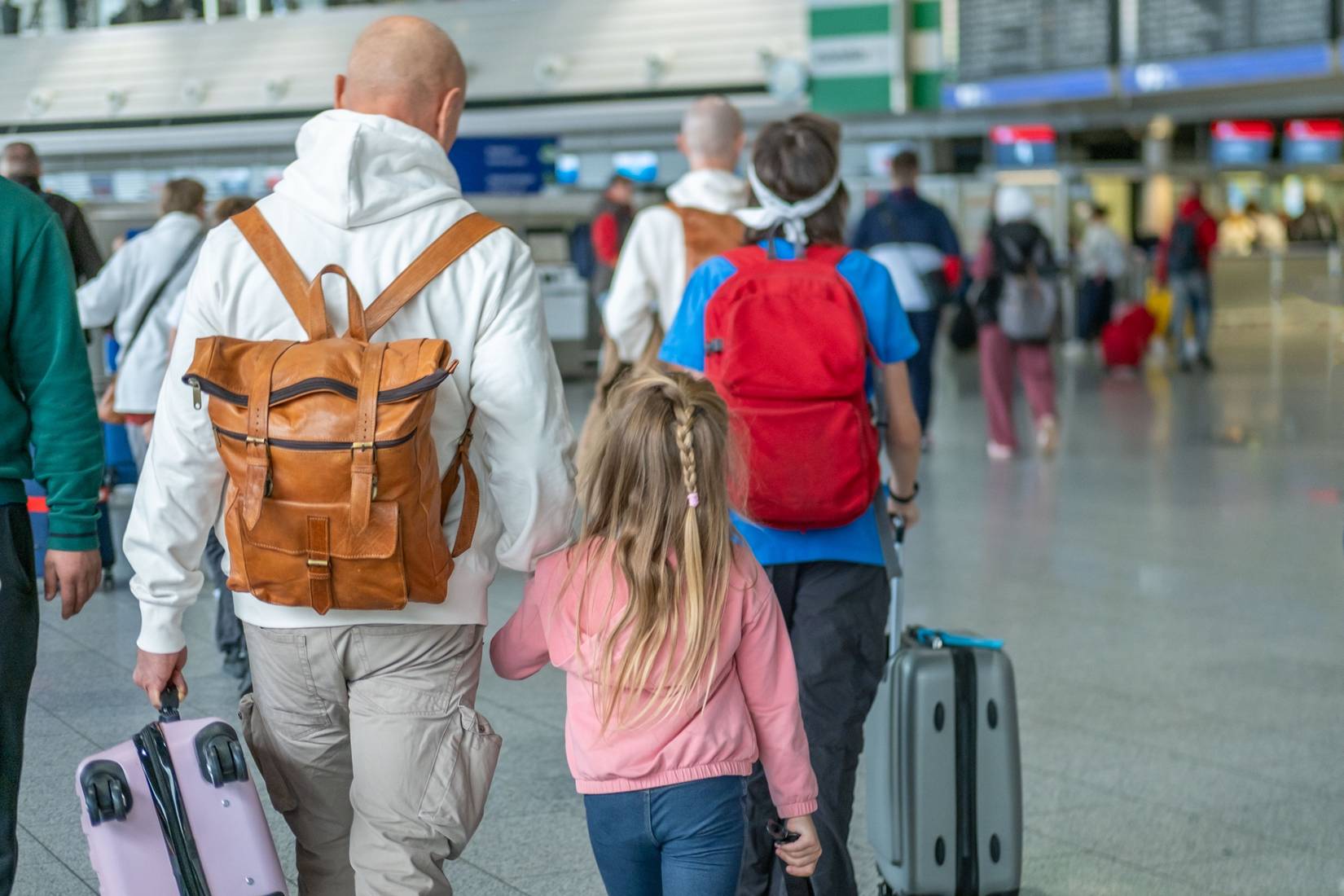
Many of the parents commenting on the United post made the same observation: a child having a bad flight is different from parents making no attempt to manage their children’s unruly behavior in public.
Even experienced parents with well-behaved children can’t guarantee that a toddler will remain happy for several hours on a cramped plane, but preparation can reduce the odds that boredom, hunger, or unfamiliar surroundings turn into a cabin-wide problem. By researching tips for flying with kids ahead of time, parents improve their odds that the flight will go smoothly.
The FAA’s own advice includes bringing enough snacks rather than relying on airline food, loading entertainment ahead of time (in case Wi-Fi isn’t available), packing headphones, and bringing small toys or activities that children haven’t already seen dozens of times. Garton told the FAA that she used inexpensive new fidget toys with her own children and introduced them at different points during the trip when they needed a distraction.
Infants and young toddlers also may have a hard time dealing with air pressure changes in their ears on a flight. Bottle-feeding or offering snacks like applesauce pouches or chewy treats during takeoff and landing promotes swallowing, allowing them to naturally “pop” their ears. Pacifiers can sometimes be a helpful trick as well if the child isn’t interested in food.
Some parents also suggest using the airplane’s lavatory as a “calm-down” space, if there are several lavatories available to passengers on the flight. Spending just 5 to 7 minutes rocking a fussy child in a new, quiet space can be enough to end a meltdown and help them relax enough to settle back down in their seat (hopefully) quietly.
For younger children, an FAA-approved car seat or CARES restraint can also provide a familiar and safer place to sit. The FAA recommends approved restraints for young children throughout the flight because turbulence can happen without warning.
No strategy can guarantee a toddler is on their best behavior the entire flight. Other passengers generally understand that and can have some compassion for stressed parents.
However, it’s much harder to sympathize when watching children break safety or cabin rules while the adults responsible for them appear to have tuned out completely.