After several failed attempts to censor the exhibitions and programming at the Smithsonian Institution’s National Museum of American History, President Trump signed Executive Order 14415 (EO 14415). Of the actions detailed within, the most public facing is the requirement to add signage to walkways and sidewalks leading to the museum that decries the exhibits therein, dubbing them “inaccurate”.
This comes just days after the conclusion of a two-day congressional hearing focused on the content of the museum’s programming and exhibits. The hearing was called to address the findings of the 160-page report on the Smithsonian Institution and the facilities it manages following a months-long investigation by the Domestic Policy Council.
The new outdoor display will be handled by the Department of Interior (DOI), which is also absorbing the cost of the installation. The DOI will likely also be the agency to determine a timeline for the project at a later date, as no specific deadline was detailed in the order.
New Signage Is Coming To The Smithsonian’s National Museum Of American History
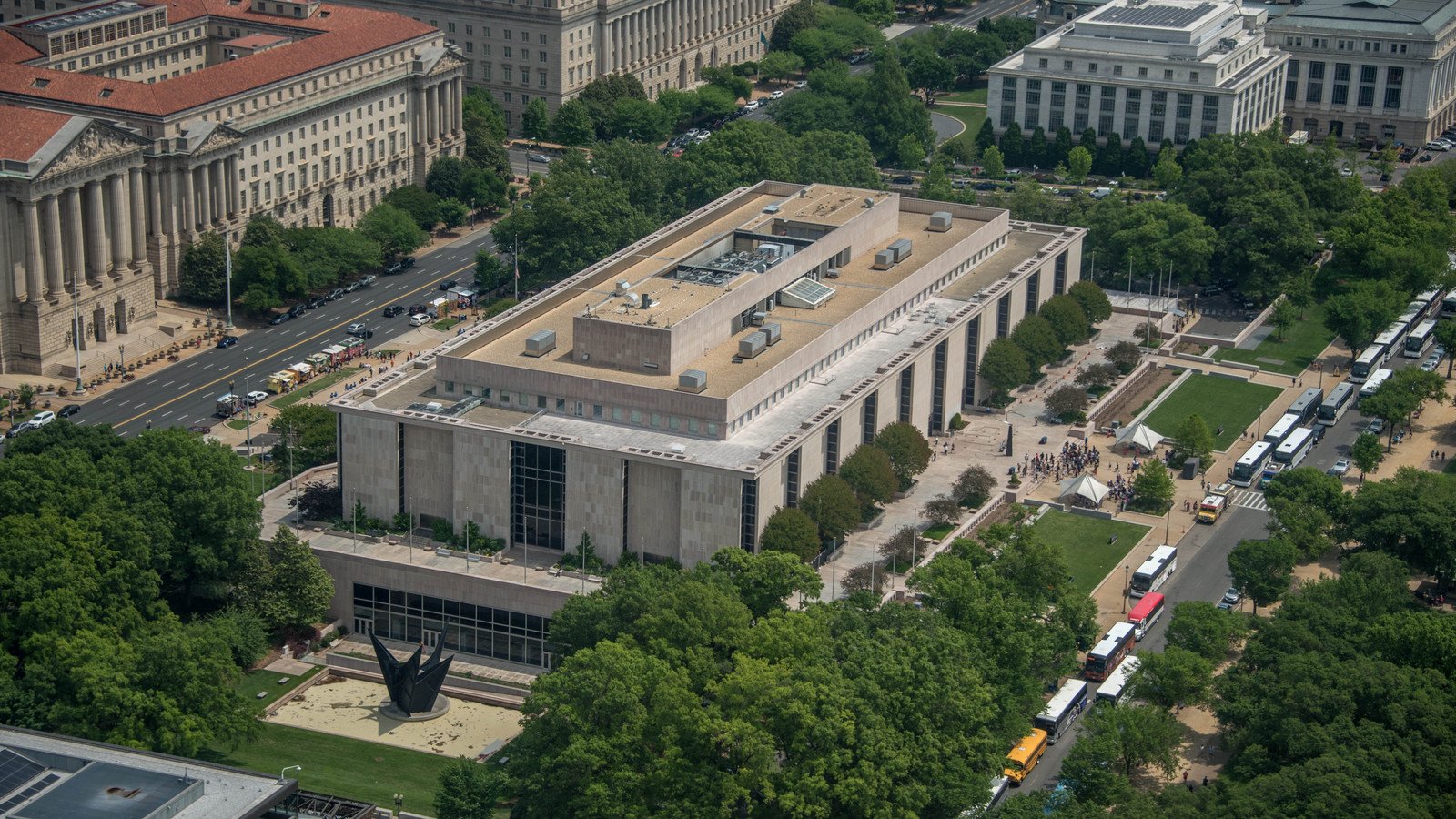
In an attempt to align the programming inside the National Museum of American History with the goals of the administration, President Trump signed EO 14415, Restoring Trust in the Smithsonian Institution, on Friday, which details changes to be made to the grounds of the National Museum of American History. Though the building is owned by the institution itself, the museum sits on the National Mall, which, along with other National Historic sites, is managed by the National Park Service (NPS), over which Trump has authority via the Department of Interior.
The order commands the DOI to install signage on the NPS managed grounds that surround the museum that challenges the content of the exhibits within. It details that this action is being taken, noting that the museum “failed to appropriately honor the 56 signers of the Declaration of Independence during this 250th anniversary year of the founding of our country”.
“The Secretary of the Interior, acting through the Director of the NPS and in coordination with the Assistant to the President for Domestic Policy, shall install temporary exhibits or signage on NPS-maintained sidewalks, walkways, and land used by the public that corrects inaccurate information presented in the Museum,” reads section 3(b) of executive order 14415.
While Trump has publicly taken umbrage against the Smithsonian’s curatorial practices, his power to influence their decision-making is limited. The executive branch does not have any say as to the contents of the institution’s facilities, as the Smithsonian’s museums are managed by private directorial staff that is overseen by a Board of Regents. Despite the signage that is expected to be erected soon, the contents of the museum are, for now, safe from censorship by the Trump administration.
EO 14415 also states that the costs associated with the implementation of the order will be borne by the Department of the Interior, which oversees the NPS. This comes during an already challenging financial year for the NPS, as millions of dollars in funds earmarked for parks have been redistributed to Trump’s projects like the Independence Day projects of Freedom 250 and the already damaged reflecting pool rehabilitation.
Executive Order 14415 Follows A Report And A Congressional Hearing On The Smithsonian

The executive order follows the Oversight of the Smithsonian: Radical Revisionism at the National Museum of American History, a two-day congressional hearing investigating the Smithsonian Institution’s management and the directorial oversight of the museum.
A sizable portion of the hearing was earmarked for questioning the director of the museum, Anthea Hartig, who has helmed the museum since 2019. While Republican lawmakers questioned the museum’s curatorial framing, Democratic representatives largely argued the administration was overstepping its authority and tried to unveil the administration’s attempt to influence an institution over which they don’t have actual authority.
Representative Walkinshaw, in addition to expressing his concern for the ongoing censorship executed by the executive branch, detailed his concerns that the administration’s opposition to the museum’s curatorial direction embodies precisely what they say they are trying to prevent: an overhaul based on personal values.
“Just like Elon Musk’s Doge wasn’t about efficiency – it was an ideological purge of the federal government – this assault on the Smithsonian has nothing to do with efficiency. It’s an ideological effort, to quote Mr. Gonzalez, ‘a cultural battle.’ Let’s go ahead and talk about rewriting history. Let’s talk about it. Because that’s what the Trump administration is doing as we speak,” said Representative of the 11th District of Virginia, James Walkinshaw.
Walkinshaw was not the only representative in attendance who believes that by attempting to control the Smithsonian, the administration is attempting to control the narrative of the history of the United States.
Representative Jasmine Crockett highlighted the complicated and often overlooked portions of American History in her questioning and address.
“Attacks on the Smithsonian, or any other institution that’s willing to tell the true history of America, is not only an attempt to rewrite history, it’s an attempt to erase history,” said Representative of the 30th District of Texas, Jasmine Crockett.
The Domestic Policy Council’s Report On The National Museum Of American History

The hearing was called following a report titled Saving America’s Story: How Ideological Capture at the Smithsonian Institution’s National Museum of American History Erases Our Heritage, that was published after an extensive investigation spearheaded by the Domestic Policy Council. The report contends that the museum “fails in the basic task of illuminating our heritage” and “explicitly adopted an ideological framework that no longer treats the American story as a shared national inheritance to be taught or celebrated.”
Specifically, the report highlights the council’s distaste for the institution’s seven main touchpoints through which it interprets many of the museum’s materials. While the Smithsonian calls these values the “core issues of our time,” the report describes issues such as race & identity, gender & sexuality, economic inequality, and climate change as merely “ideological storyline[s]” that “provoke visitors into activist forms of political resistance.”
The Root Cause Of Censorship At The National Museum Of American History

All of these actions against the Smithsonian levied by the executive branch – the Domestic Policy Council Investigation, the findings report, the congressional hearing, and now Restoring Trust in the Smithsonian Institution – all stem from a March 2025 Executive Order 14253, Restoring Truth and Sanity to American History. Under the purview of EO 14253, the administration has spearheaded several censorship campaigns across the NPS, including within parks, on websites, and of staff communications.
While this latest action has not fundamentally altered any of the exhibits inside the National Museum of American History, the Smithsonian Institution figures prominently in the text of EO 14253, despite the executive’s lack of influence over what they choose to display.
“Once widely respected as a symbol of American excellence and a global icon of cultural achievement, the Smithsonian Institution has, in recent years, come under the influence of a divisive, race-centered ideology. This shift has promoted narratives that portray American and Western values as inherently harmful and oppressive,” reads section 1 of EO 14253.
While Trump has so far been unable to affect the Smithsonian’s curatorial decisions directly, it is clear, given his administration’s ongoing actions against the institution, that he intends to utilize every avenue possible to influence the organization and its facilities.
Currently, a legal challenge against the administration’s censorship is stalled in the federal court of appeals, during which, as a federal judge ruled, the DOI can continue to order the removal or addition of signage to public lands they oversee. If the appellate court upholds the original ruling, which would overturn all of Trump’s parks censorship, it would likely also require the removal of the museum’s new signage as well.