There are strict rules about what can and cannot be brought through an airport security checkpoint. Often, the Transportation Security Administration (TSA) will stop travelers who try to bring a commonly banned item, such as a liquid that violates the 3-1-1 liquid rule.
Other times, TSA will catch a traveler bringing something far more unconventional. In June, the agency reportedly confiscated a marathoner’s sun-shaped medal, which was adorned with spikes. Now, TSA has stated that an officer caught a traveler attempting to take a stolen piece of history through a checkpoint at Alabama’s Gulf Shores International Airport (JKA). And the artifact was intended for use as a weapon of war.
TSA Officer Discovers Stolen Piece Of History At An Alabama Airport
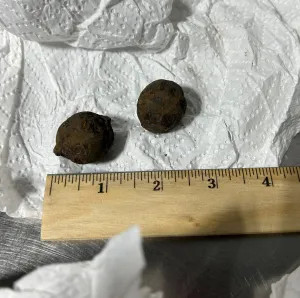
TSA said that an “Indiana Jones-esque” artifact was found at Gulf Shores International Airport on July 18 when an officer discovered five small cannonballs that had been stolen from nearby Fort Morgan.
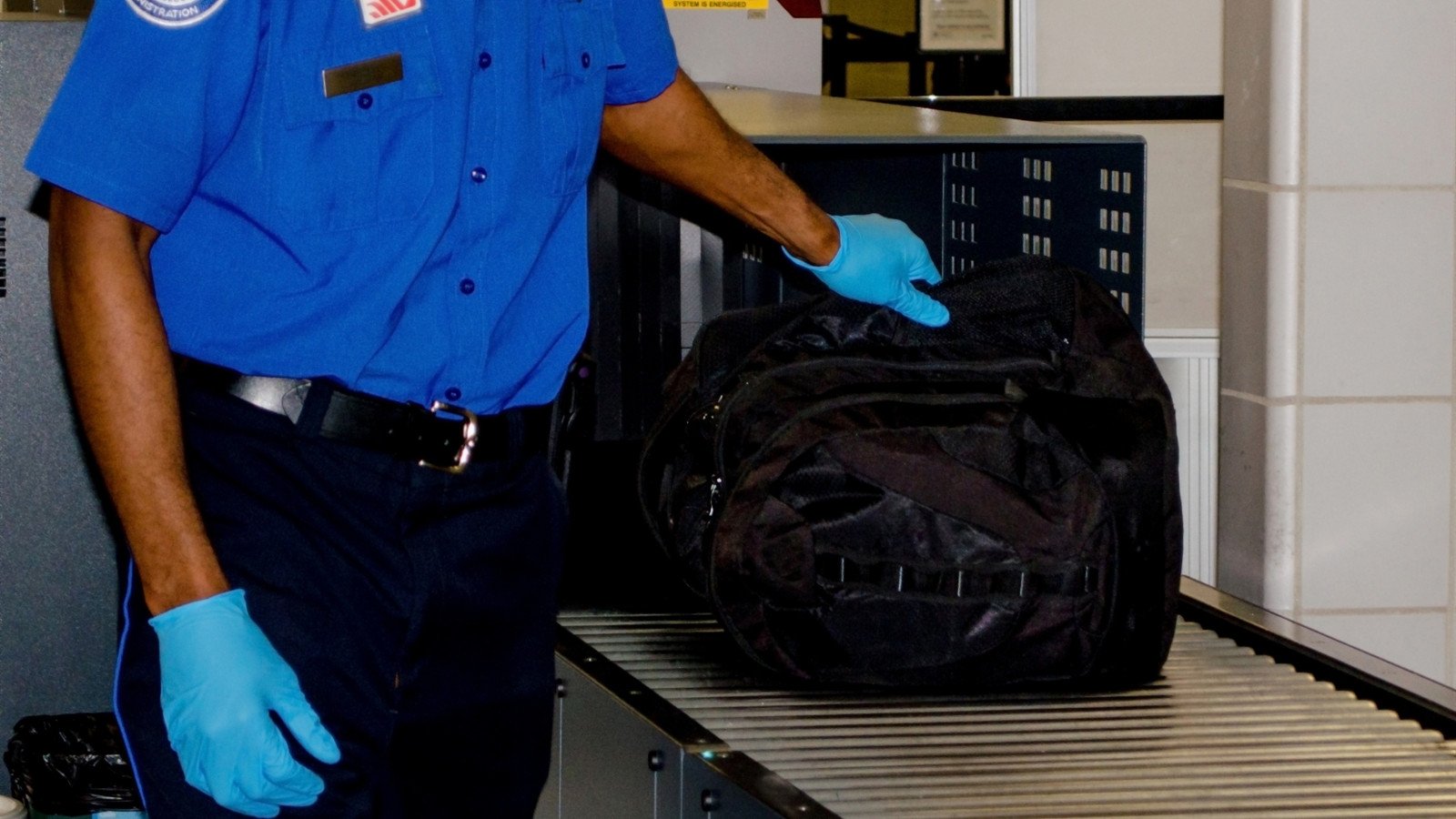
While screening a checked bag, Lead TSA Officer Justin Dupree, who has worked for the agency for four years, noticed a large object on the X-ray screen that he initially believed was a medicine ball.
On realizing it wasn’t the exercise equipment, but rather a weapon, he said he was “scared.”
“My first thought was, ‘I couldn’t see a fuse and need to get some help quick,’” Dupree said. “I couldn’t see the entire item but was scared I might have been holding a live explosive.”
Dupree contacted Supervisory TSA Officer Richard Cash, who was stopped by Dupree and told him that there might be an explosive in the bag.
“I observed the X-ray image and the bag and concurred we had a potentially dangerous item,” Cash said. “I then instructed Justin to maintain control of the bag until I made the proper notifications.”
The cannonballs were different sizes. Dupree said the larger ones were about the size of a grapefruit and weighed about the same as a small shot put.
“I had never seen anything quite this unique,” Dupree said. “I’ve seen inert grenades and training munitions but never an Indiana Jones-esque stolen artifact-type situation.”
The local sheriff’s office and a TSA explosives specialist were contacted.
TSA Investigates Artifacts To See If They Are Dangerous
Cash said this incident was the first of its kind for him during his time as a TSA officer.
“I had never seen anything like this,” Cash said. “It was my first time dealing with a potentially live explosive, and it’s actually only the second incident we’ve had since JKA opened in May 2025.”
TSA affirmed that the cannonballs had no “explosive material or active components.” That didn’t mean they were allowed on the plane, however.
“Technically, they were artillery munitions and considered prohibited items,” Cash said. “With assistance from the [explosives expert] and law enforcement and because we were unable to initially determine they were inert, they could have been dangerous to the aircraft.”
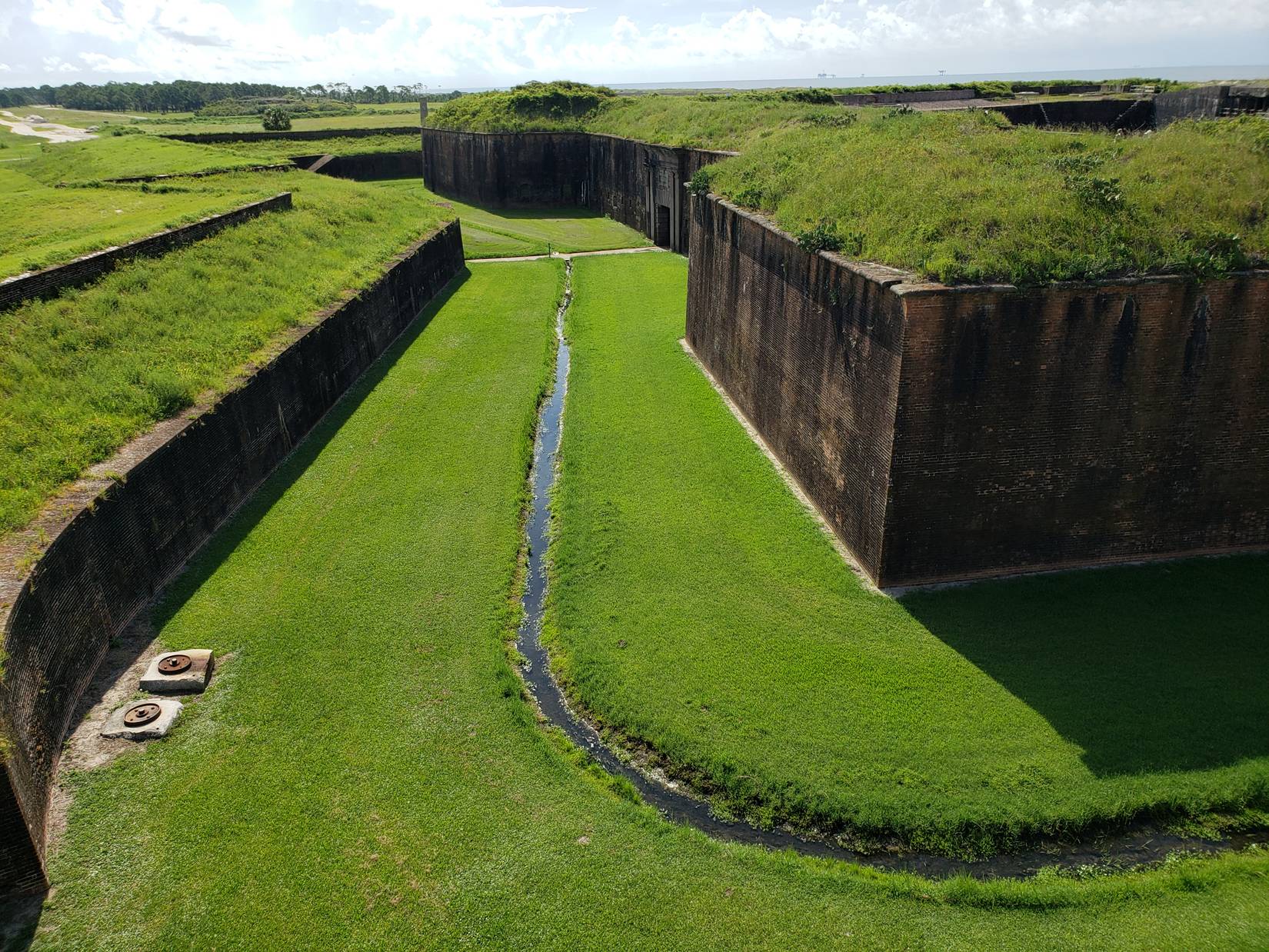
Local police determined that the objects were stolen from Fort Morgan.
Fort Morgan is a Civil War site that became significant during the Battle of Mobile Bay, which saw a Union victory.
Police say the passenger was unaware of how the cannonballs were taken. The Baldwin County Sheriff’s Office returned the artifacts to Fort Morgan.
TSA Alabama Federal Security Director Tara Corse applauded the officers and other authorities for their work.
“I am very proud of the great catch and teamwork by Officers Dupree and Cash and TSA Alabama along with our tremendous partnership with the Baldwin County Sheriff’s Office and Gulf Shores Police Department,” Corse said.
She went on to warn travelers about bringing weapons into airports, even if they’re replicas.
“Even if inert and not active, travelers should avoid bringing weapons of any kind, including replicas, to the airport. They can cause security alerts, flight delays and safety concerns,” Corse added.
While sometimes it’s fairly clear when an object deemed a weapon isn’t allowed through security, other times it’s not so obvious.
Information On TSA’s Weapons Ban
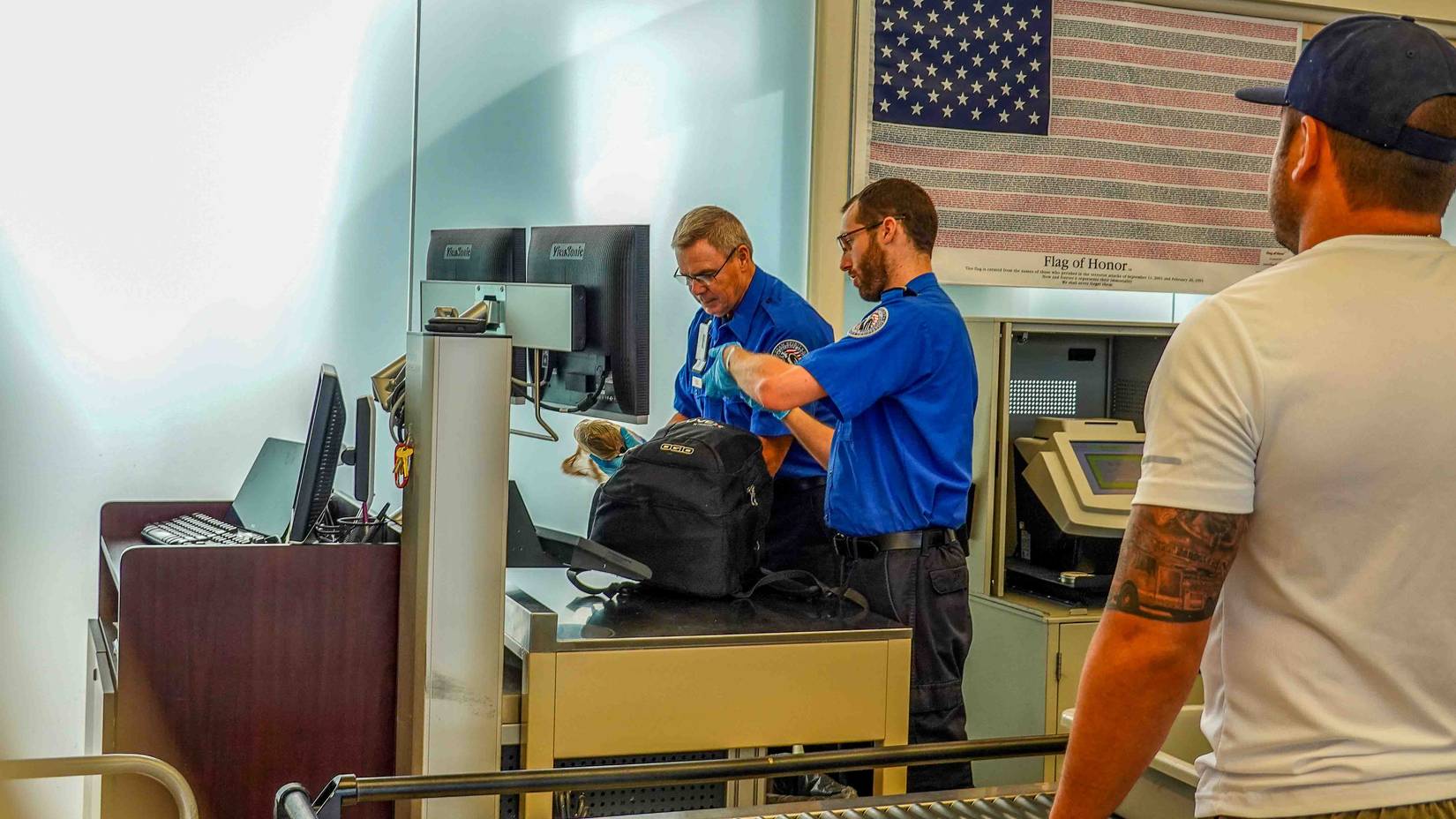
Mary Allen, a former TSA officer at New York City’s JFK Airport and now-correspondent for TheTravel, said that “some of the most emotional checkpoint moments didn’t involve obvious weapons.”
Allen explained that it’s typically everyday items that travelers had forgotten were in their bags, some of which were intended for self-defense.
“Pepper spray, small pocket knives, tactical pens, kubatons (a self-defense keychain weapon), or box cutters. These self-defense items are considered weapons and are not allowed through security,” Allen wrote.
When objects like these are discovered, Allen says that passengers have a few options for how to proceed:
- Return it to their vehicle
- Place it in their checked bags (if allowed and if time allows)
- Voluntarily surrender it
- Mail it home (only available in some airports)
She said that most travelers decide to just give up the item.
“And that’s when frustration sets in, not because they disagree that it could be used as a weapon, but because they didn’t realize it was considered one in the first place. At the TSA checkpoint, everyday logic doesn’t apply; security definitions focusing on threat detection do,” Allen wrote.
While most travelers don’t have to worry about accidentally leaving a cannonball in their luggage, they should be mindful of more common, self-defense objects.