Yellowstone National Park is one of the most visited parks in the United States. In 2026, it has already seen over 1.6 million visitors through June, according to the National Park Service (NPS).
The park, host to a variety of fascinating sites, is famous for its geothermal features. And while Yellowstone can make for a memorable trip, it is not a risk-free environment. In fact, NPS states that the park is “a dangerous place.” The agency provides several tips to help keep travelers safe while visiting.
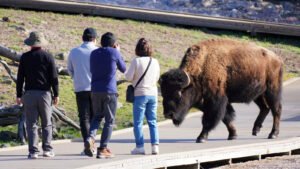
Not everyone follows the rules, however. A July 19 video shows two visitors walking atop a geothermal feature of the park, where a bison was roasted alive in 2025. This comes after a rampaging bison tossed a tourist in the air on July 10. This latest incident at the park, however, could lead to legal ramifications.
Yellowstone National Park Visitors Filmed In A Dangerous, Banned Area
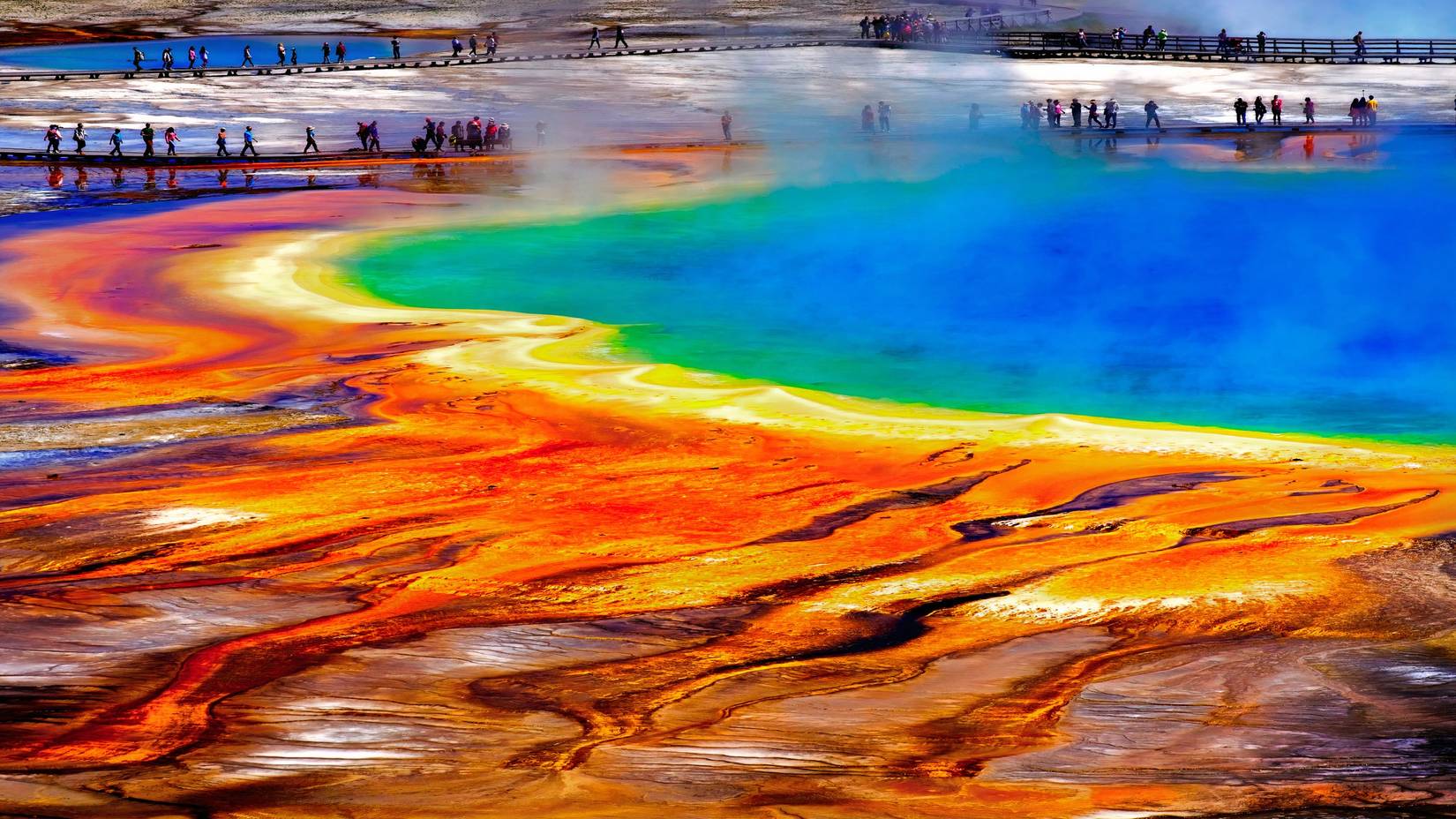
A Yellowstone National Park visitor filmed two tourists walking in a restricted area of Yellowstone’s Grand Prismatic Spring, the largest hot spring in the United States, with a diameter between 200 and 330 feet, according to the NPS. The video, which was shared on Instagram on July 19, shows the two individuals appearing to take pictures as they walk along the edge of the water.
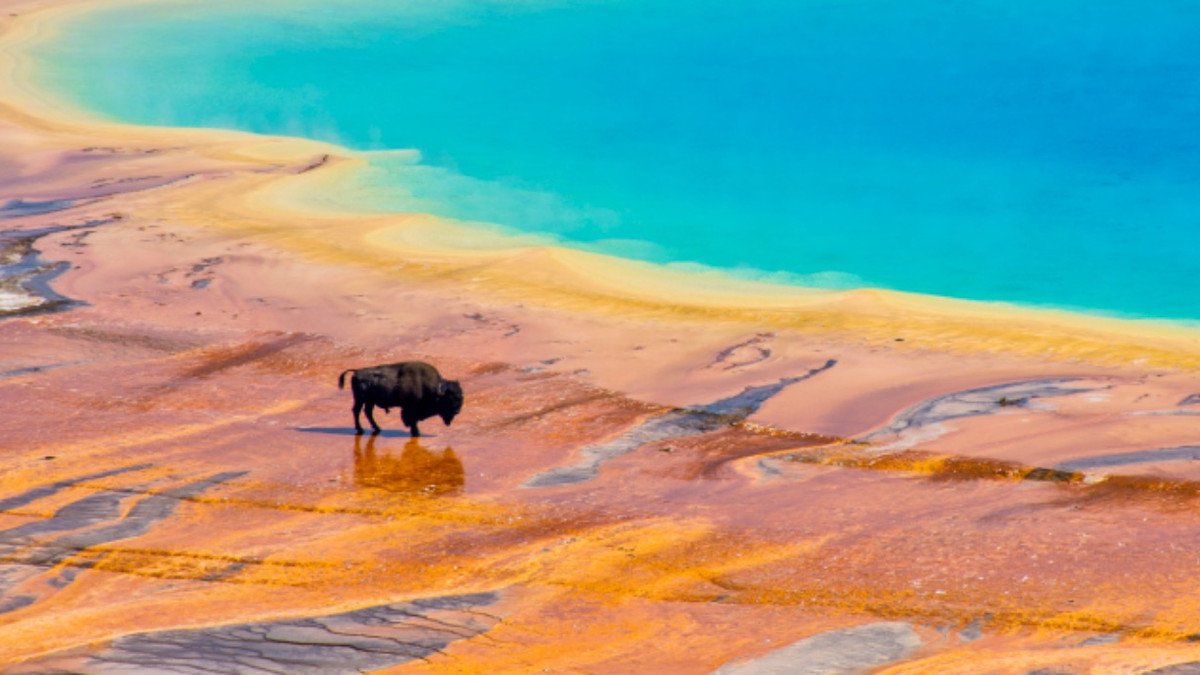
In the video’s caption, the visitor who filmed the pair highlighted a June 2025 incident in which a bison stumbled into the spring’s scalding waters and died. The water is over 121 feet deep and can reach 192 degrees Fahrenheit.
She added that seeing the two individuals’ disregard for the rules left her emotional.
“It made me so furious that I literally had tears in my eyes!” the visitor wrote.
She explained that walking along the hot spring’s crust is not only a safety hazard, but can also damage the ecosystem that lives there.
“It’s against the rules to get off the boardwalks, it’s disrespectful to the Park, it’s disregarding nature itself, and it DESTROYS the fragile ecosystem of the bacterial mats,” she wrote.
Bacterial mats give Grand Prismatic Spring’s perimeter its distinct color. The tiny, delicate organisms, called thermophiles, thrive at high temperatures and can be damaged by stepping on them.
The visitor called for the pair to be handed a “lifetime ban” from Yellowstone, adding that she had reported them. While tourists have been banned from the park for breaking this rule, doing so can also lead to legal trouble.
Information On Law Against Walking In Banned Thermal Areas In Yellowstone
Yellowstone operates under federal statutes that allow park rangers to issue criminal citations in U.S. District Court to people who break certain rules.
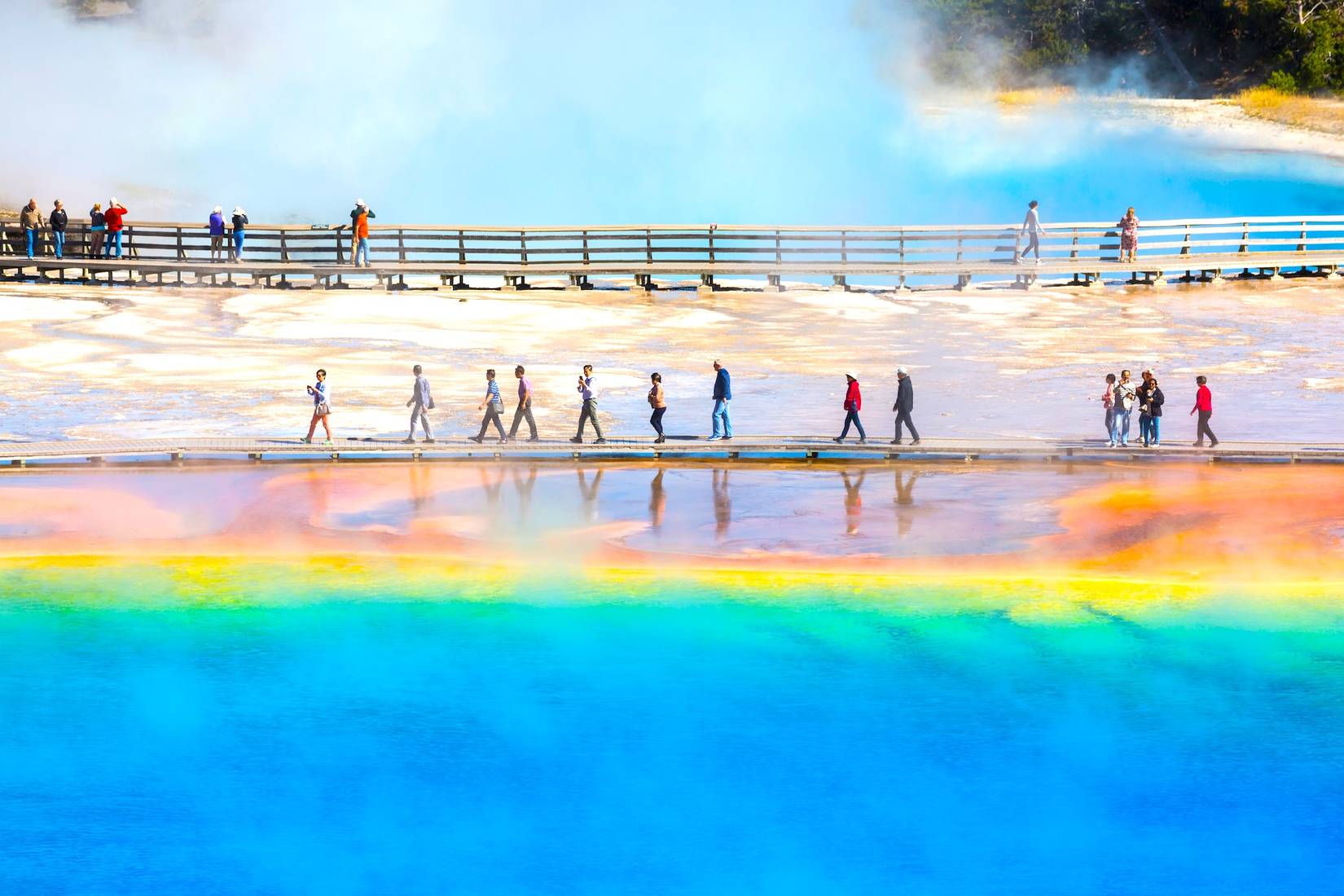
According to federal regulation 36 CFR § 7.13(j), people must walk in designated areas when visiting Yellowstone’s thermal areas.
“Foot travel in all thermal areas and within the Yellowstone Canyon between the Upper Falls and Inspiration Point must be confined to boardwalks or trails that are maintained for such travel and are marked by official signs,” the regulation states.
Penalties can include fines and even jail time. In late 2024, Joseph Aita of Colorado Springs walked off the trail in a thermal area of the park and was fined $3,000 and sentenced to seven days in jail. He also was banned from the park for five years.
Earlier that year, Viktor Pyshniuk, a 21-year-old tourist visiting Yellowstone, also was sentenced to seven days in jail and banned from the park after leaving a designated area to get closer to Steamboat Geyser, the world’s tallest active geyser, according to The New York Times.
And the rules aren’t for no reason. Yellowstone’s geothermal sites can be dangerous. The NPS provides safety tips for Grand Prismatic Spring on a page about the hot spring.
|
Cautionary Guidance For Grand Prismatic Spring |
|
Stay on boardwalks and designated trails. |
|
Hydrothermal water can severely burn you. |
|
Never run, push, or shove. |
|
Supervise children at all times. |
|
Do not scratch hydrothermal mats. |
In 2025, tourists witnessed a bison fall into Grand Prismatic Spring, causing its death.
Bison Died After Falling Into Hot Spring At Yellowstone National Park
On June 21, 2025, a bison was spotted near the hot spring, taking a step into a shallow area, and quickly turning around before stumbling at the edge and falling into deeper waters, Yellowstone visitor Louise Howard shared in a Facebook group at the time.
“Unfortunately, I witnessed the bison drowning in the Grand Prismatic Springs early yesterday morning. It took a few steps into a shallow area to the right of the pool, it turned around and stepped out very quickly. It stood for a moment, then turned back towards the spring and stepped into a deeper section then couldn’t get out despite trying its best,” Howard wrote.
Images and videos captured the accident, showing the animal frantically thrashing in the water before being fully submerged. Police said the animal died fairly quickly after falling into the hot water.
Michael Poland, scientist-in-charge at the Yellowstone Volcano Observatory, told CBS News that such occurrences involving animals are not unprecedented, adding that scientists have discovered skeletons at hot springs around the park.
“There are thin crusts that form on the edges of these and so it’s difficult to tell if there is boiling water directly beneath you,” he said. “What exactly happened in this case, it’s impossible to say.”
The bison serves as a cautionary tale, reminding visitors to stick to the designated spots, as walking in one of these banned areas can lead to far more severe consequences than just jail time and fines.
TheTravel contacted the NPS but did not receive a response in time for publication.