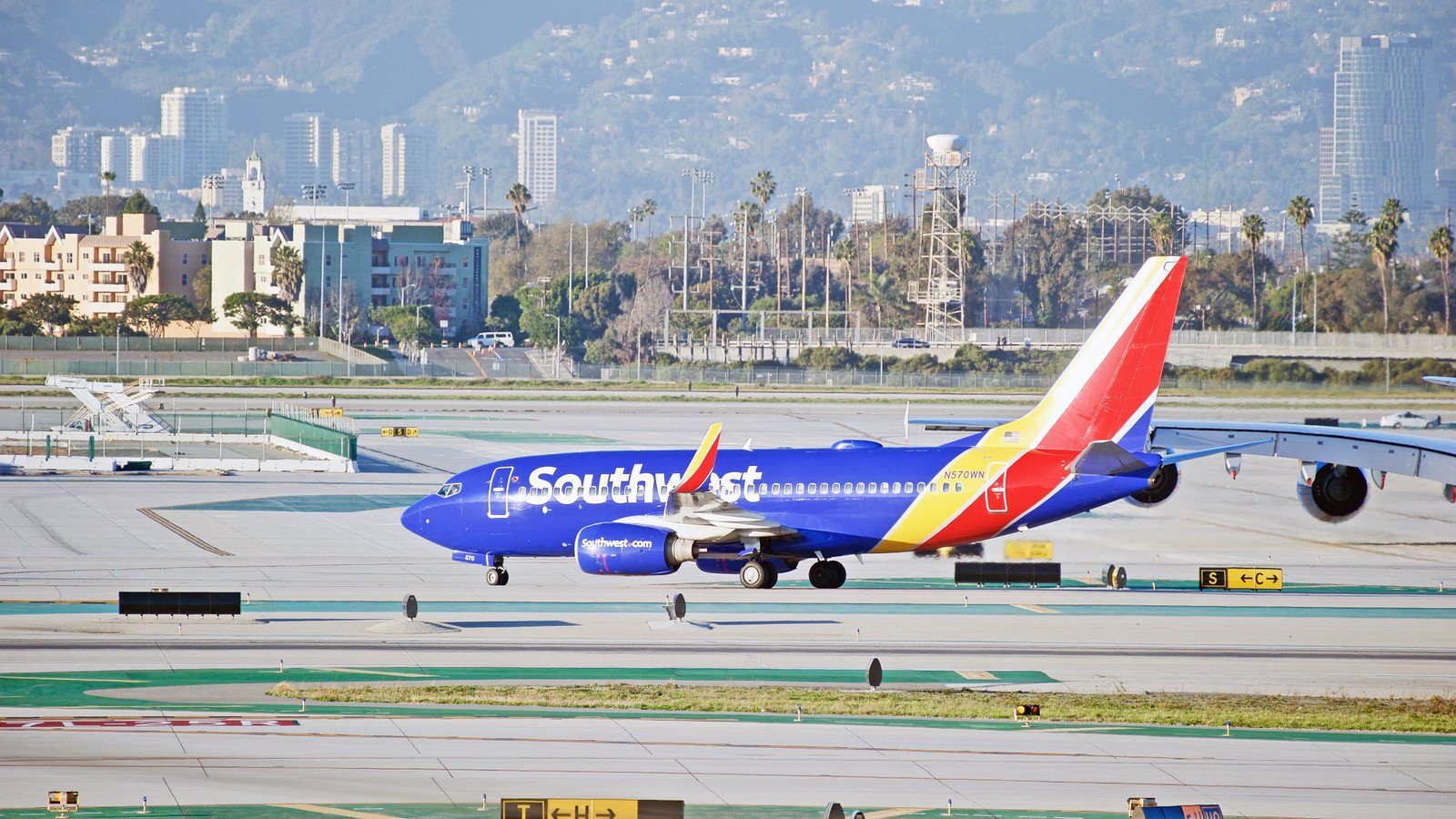
Jet fuel is one of an airline’s largest expenses, according to the International Air Transport Association (IATA). This means that a sudden price increase is likely to place additional pressure on its finances (and travelers’).
That challenge became noticeable for Southwest Airlines earlier this year as the West Coast fuel supplies dwindled and California prices soared higher than in other parts of the country. As a result, the airline tested a solution that brought millions of gallons of jet fuel to Los Angeles via the Panama Canal.
While the experiment provided a temporary cushion during a period of uncertainty, Southwest’s fuel expenses still increased significantly compared with last year. And with fuel prices still volatile, concerns about whether travelers will see higher ticket prices.
Southwest Airlines Sent 12.6 Million Gallons Of Jet Fuel Through The Panama Canal
This spring, Southwest Airlines chartered a vessel to transport jet fuel from Texas to California — the first time the carrier had tried such a strategy. The ship left Houston with 12.6 million gallons of fuel, traveled through the Panama Canal, and arrived in Los Angeles on May 28, according to CNBC.
Although that amount sounds substantial, the carrier’s overall fuel consumption in its most recent full quarter was around 564 million gallons. Still, Chief Financial Officer Tom Doxey told CNBC that the delivery was still a big help to Southwest.
“It brought like a week’s supply to the West Coast at a time when supply was most constricted … when it was most at risk,” Doxey said.
However, this kind of jet fuel delivery is far from standard. The shipment was made possible due to a temporary waiver of the Jones Act. The century-old law normally requires goods moving between U.S. ports to travel aboard vessels that are “U.S.-built, U.S.-owned, and coastwise endorsed by the U.S. Coast Guard.”
Southwest also later clarified to TheTravel that the shipment was a “one-off move to make sure we had enough supply,” although the carrier “would certainly do it again” if necessary.
West Coast Fuel Concerns Led Southwest To Try A New Strategy
Southwest’s unconventional shipment comes amid a broader issue in the West Coast fuel market. Unlike other parts of the country, the West Coast has few pipelines connecting it to Gulf Coast refineries, and shipping fuel from other parts of the country is more expensive, according to the U.S. Energy Information Administration (EIA).
“Unlike the East Coast, the West Coast has historically been more isolated from other U.S. regional markets. It has very limited pipeline capacity connecting it to refining capacity on the U.S. Gulf Coast and faces higher costs associated with receiving waterborne gasoline from elsewhere in the United States because of geographic constraints,” the EIA’s most recent short-term energy outlook states.
The agency also previously found that Southern California’s refineries haven’t produced enough jet fuel to keep up with the region’s demand, leading to reliance on additional supplies from refineries in Asia.
That dependence makes it harder to replace fuel quickly when there’s a drop in local production, as shipments across the Pacific can take weeks to arrive.
Estimated Tanker Travel Times To The West Coast:
|
Fuel Origin |
Estimated Travel Time |
|---|---|
|
U.S. Gulf Coast |
10 Days |
|
Asia |
3 Weeks |
|
Europe |
Over 4 Weeks |
Those weaknesses became clearer this spring when the war involving the U.S., Iran, and Israel disrupted global oil supplies and pushed jet fuel prices higher. Southwest explained that exports from Asia slowed during the early stages of the war, making the shipment a temporary safeguard.
“It provided us a buffer at the time, but I wouldn’t characterize the situation as ever reaching dire in terms of supply,” an airline spokesperson told TheTravel.
Although the airline says its immediate supply concerns have eased, travelers still wonder how continued fuel-market volatility could affect fares and flight availability.
Higher Fuel Expenses Are Creating More Cost Concerns For Southwest Passengers
Southwest was recently scrutinized after one of its passengers was “abducted” at Denver International Airport. Last month, it also faced scrutiny in a Reddit discussion, where one passenger said a nonstop trip to Las Vegas that previously cost less than $300 was now priced at $650.
“Is it me, or has Southwest pricing gone through the roof? I used to be able to book a flight direct to Vegas for under $300, and now I can’t get a flight under $650,” the Redditor wrote.
The traveler later found that Southwest cost more than Delta for a comparable nonstop flight, writing, “They are now more expensive than Delta for the same trip and time.”
Other commenters similarly questioned whether Southwest still offered enough value to justify its higher fares.
- “I’ll continue to fly Southwest for work travel, but for personal travel it’s time to consider Delta. With such comparable prices atm, nothing beats the Delta experience.”
- “Yup. I’ve flown Delta Comfort+ for less than Southwest basic on some routes.”
- “The plane won’t even be full either. They always jack up the prices for last-minute travelers regardless of how many tickets they’ve sold.”
The airline’s financial results prove that passengers aren’t imagining the higher ticket prices. According to Southwest’s second-quarter 2026 results press release published earlier this week, average passenger fares increased 21% compared with the same period in 2025.
Southwest’s expenses have also risen. Though the carrier spent less than expected and less than other airlines per gallon, it spent nearly $900 million more on fuel during the quarter than it did last year.
Second-Quarter 2026 Fuel Cost Per Gallon By Airline
While fuel prices could potentially fall and cut down on the airline’s quarterly fuel spending, savings on operational expenses don’t automatically mean tickets will become cheaper. As a result, whether passengers will continue encountering steep fares remains unclear.
For now, Southwest’s fuel shipment appears to have achieved its immediate purpose by providing an additional supply buffer at a lower regional cost.